Is Whey Protein Evil?

Whey ProteinI was recently listening to an interview with a well-known female athlete. In it she was asked about the fears some women have when beginning weight training. The main fear was that weight training would lead to bulkiness. She replied “females will only get bulky if they lift heavy and take whey protein. Women shouldn’t take whey protein”.

I found this to be a hugely sweeping statement and entirely untrue.

I would like to provide some basic information on whey protein, some of it’s benefits and how best to use it.

What is it?

Little Miss Muffet
Along with curds, Little Miss Muffet ate it before she was frightened away by a spider

Whey protein is a refined form of milk. After pasteurisation milk is separated into different products including low-fat milk, cheese and butter. When cheese is produced there are some by-products, the main being liquid whey. Liquid whey is then dried into powder form and flavour is added. This is what we buy in bags/tubs from various companies.

For a more detailed explanation on how it’s made click Here

Where Is It Useful?

Protein is an essential macronutrient that our body needs for the repair and growth of muscles. Active people generally require 1.2-2 grams of protein per kg of bodyweight (depending on how active you are). Protein comes from a variety of sources such as chicken, beef, fish, eggs, nuts, milk, etc., Larger individuals who are very active may need in the region of 200grams of protein per day. This would be very difficult to consume exclusively from food so whey protein is a very useful supplement.

Vegetarians/Vegans may also find it difficult to meet protein requirements so supplementing with whey is again very useful.

Powdered whey is very handy to carry around and has a long shelf life, especially when compared to meat, dairy and eggs. This makes it useful for people who travel a lot or do not have access to cooling facilities while at work.

It can easily be carried around in a small lunchbox or shaker and mixed with water/milk to consume directly after a training session/workout or as a mid-day snack.

Myth-Busting

Many believe that whey protein will make you bulky as it causes muscles to grow rapidly and adds unwanted size around the muscles.

Unfortunately for many athletes, bodybuilders and fitness enthusiasts, this is not the case. Building muscle takes a lot of effort in the gym, a lot of food and smart recovery. A simple scoop of whey protein is a tiny drop in the ocean of muscle/strength gain.

A normal chicken fillet contains about 30g of protein while a scoop of whey contains about 24g. A chicken fillet certainly won’t make someone excessively bulky (if at all) so something containing less protein is bound to have a lesser effect.

Many females fear weight training and taking supplements as they feel they will gain size too quickly especially when they supplement with whey.

Males who spend countless hours in the gym and consume large amounts of protein put on weight as they are aided by the hormone testosterone. Females have much lower levels of testosterone and so have greater difficulty in adding muscle (even when they want to).

The main factor affecting increases in size (or bulk) is calorie balance. If you eat more calories than you use then your body will grow larger. Where it grows and whether it increases in fat or muscle will depend on what type of training you are doing.

Starbucks Latte
A normal latte contains 190 calories. Pumpkin Spice, Mochas, sugar, muffins will all dramatically add extra calories

A standard scoop of whey protein contains 130 calories. The majority of which is lean protein. A medium Starbucks latte contains 190 calories before adding sugar or anything else.

If you really are concerned with not adding size then you should be aware of your overall calorie balance throughout the day as opposed to one or two supplements and how they may affect your body.

Many ask if it is safe for teenagers to take along with weight training. Parents often feel their muscles will grow too fast and affect growth. While it is entirely safe to take I would never recommend it, as a balanced nutritious diet will provide all the protein required to maximize time spent in the gym. Ensuring correct technique and exercises are performed is of much more importance to teenagers in the gym than what supplements they are taking.

How To Use It

Most people will consume whey protein in the form of shakes. These are usually directly after a workout/training or as a meal replacer at any stage of the day when you do not have time to prepare a regular meal.

Personally, I find shakes a bit boring and can leave you feeling hungry quite soon afterwards.

My two preferred methods to use whey with coffee or with porridge oats.
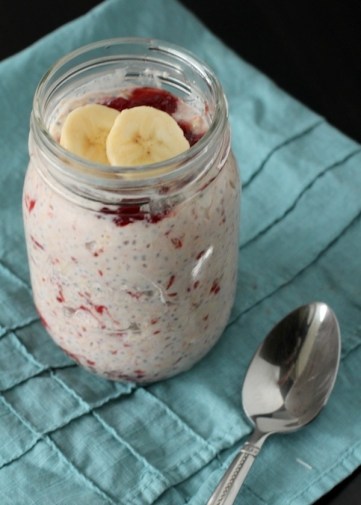
Overnight Oats
Normal porridge or overnight oats get a whole lot more exciting with flavoured protein powder, nuts and fruit

There are a variety of flavours available. The most popular being vanilla, chocolate, strawberry and banana. I prefer to add half a scoop of chocolate or vanilla to my morning coffee. It tastes just like a mocha or vanilla latte. You can also add it to decaf before bed to replicate a hot chocolate while also getting in extra protein.

Alternatively you can add it to porridge oats. Recently I have been adding a full scoop of cinnamon flavour to 80-100g of porridge with milk or water. This is a fantastic meal either before or after training and can include anything else you would add to porridge such as blueberries or raspberries.

Where To Buy It

Most large towns/cities now have a vitamin shop that sell a variety of flavours from many companies.

Many gyms now sell protein supplements in many flavours.

Buying online is generally a cheaper option but be careful to buy from reputable sites and companies. The sites I usually use are MyProtein, BulkPowders and HPnutrition.

Is It For Everyone?

I am not suggesting that everyone should take whey protein. If you are able to eat adequate protein from natural sources then supplementation is not necessary.

It’s not a magic powder that will suddenly lead to huge gains in size and strength.

It will not make up for a bad diet filled with fast food and takeaways nor will it improve performance more than proper hydration and sleep.

It is very useful if used correctly but cannot make up for eating natural foods in the right quantities.


If you have any questions regarding whey protein or any other supplement feel free to email me at fhsperformance@gmail.com.


You can also avail of the free workout programmes and nutritional information that I provide from the same email address.


Training Harder? Recover Smarter!

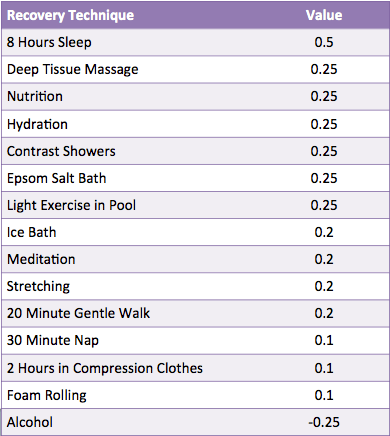
Screenshot 2016-05-02 10.52.19

As we enter into the summer months, training is kicking up a notch. Matches are more frequent, the ground is harder and important competitions loom closer. Everyone is expected to train harder but how many of us know how to match our recovery to this hard training?

Above you will see a table with a variety of recovery techniques. Each technique has a corresponding value. To ensure you are fully recovered, all of the values should add up to a minimum of 1. If a training session, match, race or competition is especially hard then you may need to reach a higher value, such as 1.5 or even 2.

Each strategy has a different value, as some will aid recovery much quicker and more effectively than others. The strategies with higher values should be given more importance, as they will provide the most benefits. Not everyone will be able to access each strategy but the simplest are often the most effective so don’t worry about substituting one in for another.

Below I will a brief guide to each one and how to get the most from each.

8 Hours Sleep

As simple as it sounds. Get to bed early. Turn off Netflix. Put the phone away. Do some light reading (from a book or kindle) and sleep in a dark room. Try to set a bedtime routine such as getting food or clothes ready for the morning before you go to bed. Avoid caffeinated drinks like tea/coffee. Consider taking some ZMA supplements or drinking a chamomile tea as they help to achieve a deeper sleep. I have found setting an alarm very helpful in getting myself to bed at a consistent time.

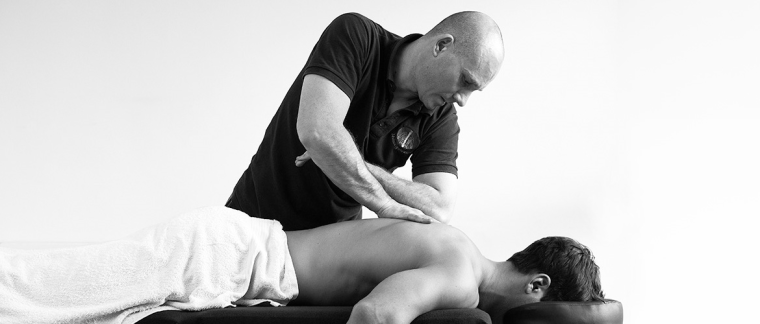
Deep Tissue Massage

This will not be practical for many, as they do not have access to a masseuse on a regular basis. Many elite athletes will be in contact with a physio at most training sessions so a massage after training will boost recovery. Try to only use massage about once a fortnight unless being treated for an injury as it will lose its benefits if used too frequently. You also don’t want to become ‘that guy’ that’s always on the physio table.

Sports Massage
Sports massage has great benefits but don’t use it too often or you will become reliant

Nutrition

I could write a book on the correct nutrition to accompany training and recovery so I will keep it very short and simple for this post. A healthy, balanced nutritious diet will aid everyone regardless if they are elite athletes, recreational joggers or completely sedentary. Takeaways and processed food will not aid recovery much bar providing calories. Whole foods such as beef, chicken, fish, eggs, potatoes, rice, milk, nuts, fruit and vegetables will provide the body with all it needs to recover in terms of nutrition.

Hydration

Drink plenty of water throughout the day. How much is plenty? If you weigh between 50kg and 65kg then 2 to 2.5 litres is enough in a day. 65kg and 80kg should consume 2.5 to 3 litres. 80kg to 95 kg need between 3 and 4 litres. 95kg+ need 4-5 litres per day. The majority of your hydration should come from water. If you don’t like the taste then add a small bit of no added sugar cordial such as Mi-Wadi or Robinsons. Lucozade Sport or other isotonic drinks are not required unless you are training very intensely for over 80 minutes. Some people may require extra water if they sweat more during training. The simplest way to find out how much water you lose during training is to weigh yourself before and afterwards. You need to drink about the same millilitres of water for grams of weight lost during training.

Contrast Showers/Baths

This requires both hot and cold water sources set up very close to each other. Simply spend 30 seconds underneath each and repeat 2-3 times. Always begin with the cold shower. This can also be done with baths. The simplest way for many teams is to set up a tub of cold water and ice beside a hot shower. Players spend 45-60 seconds in the cold tub then immediately jump under the hot shower. Repeat for best results.

Epsom Salt Bath

Run a bath as normal with hot water but add large fistful of Epsom salt to the bath. Epsom salts can be bought in most pharmacies and vet surgeries. Spend 20-30 minutes soaking on the hot water. Make sure you bring a bottle of water to drink on while in the bath as the heat can lead to dehydration.

Light Exercise in Pool

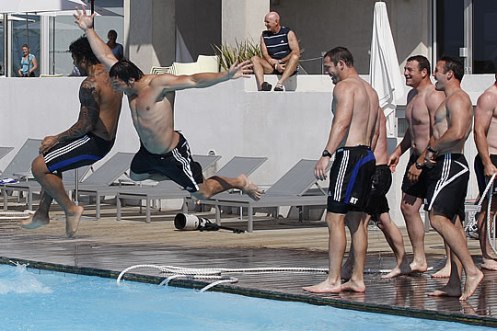
Accessible to many after a gym session and commonly used by teams after particularly tough matches. Some very light exercise and stretch

All Blacks Pool Recovery
The All Blacks rugby players using a pool session to recover mentally as well as physically

ing in the pool boosts recovery as the water takes away some of the effects of gravity. The heat in the water also helps blood move around the body. Running through a warm-up routine similar to what you normally do before a game will cover most of the movement planes. Feel free to add in any extra movements or stretches if you feel stiff.


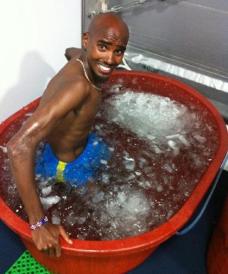
Mo in Ice Bath
With 2 gold medals in the last Olympics Mo certainly knows the importance of recovery along with tough training


Ice Bath
More effective when used in conjunction with hot water but still leaves the body feeling refreshed. A tub of cold water and ice, generally 6-9 degrees Celsius, works best when immersed for 3-5 minutes. If you do not have access to a tub then a nearby river, stream or lake will work just as well.


Meditation

This works very well for recovery of the mind, which can be as important, if not more than, the body. I am not an expert on meditation yet there are countless tutorials online that will help you to develop your own techniques. My preferred source is the Headspace app. Meditating before bed usually leads to a deeper sleep.

Stretching

By stretching I mean targeted range of motion work about a number of joints. This involves dynamic stretching around major joints such as hips and shoulders. Static stretching can also be done but should be held for a minimum of 30 seconds with 60 seconds more preferable. The usual tradition of holding each stretch for 10 seconds after a training session will have little benefit and almost no impact on recovery.

20 Minute Gentle Walk

This is very effective for people who train early in the day or have sedentary jobs. Sitting for prolonged periods leads to increased stiffness after a heavy session. A gentle walk will allow the body to get moving again, pump some blood to the affected muscles and usually provide fresh air for the mind. It can be a great chance to spend time with a pet, the outdoors or listening to music. A gentle walk for someone who trains later in the day will not be as effective before bed but can provide benefits the following morning if they have the time.

30 Minute Nap

Professional athletes are renowned for 2 habits they all have in common. An addiction to caffeine and a love of naps. If your day allows for a 30-60 minute nap then use them where possible to remain fresh throughout the rest of the day. A demanding job can leave evening sessions very tough while a short nap in between will provide an extra freshness and energy going into the evening session. This also works for people who train twice a day, such as crossfitters, who need as much recovery as possible. A daytime nap, between sessions, relieves much of the fatigue of the previous session.

2 Hours in Compression Clothes

While they will provide heat on cold days, compression clothes are now widely used by athletes for recovery. Many will pull on a pair of tight leggings after a tough training session to help aid blood flow to the affected muscles and to prevent swelling to the affected areas.

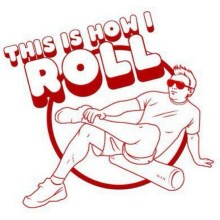
Foam Rolling

foam-roller
Foam rolling has many benefits but works best when used regularly with stretching

Many will be surprised to see this with such a low value but it will not provide as much recovery as most of the other strategies. Foam rolling is excellent for working out stiffness or small knots in muscles. If done regularly (1-2 times per week) it will have little effect as muscle damage is kept in check. Most people find it very painful as they simply don’t do it often enough. 10 minutes is plenty of time twice a week to ensure muscle stiffness is kept under control. A session of deep tissue massage may be required if foam rolling remains too sore after a prolonged period. When used in conjunction with stretching it can provide huge benefits to recovery, mobility and injury prevention.


All of the above strategies and their values are relative to the individual. Some may provide more benefit than is suggested while some may provide less. Use this table as a guide to find what works best for you. There are also many techniques not mentioned above such as spending time with family and friends that will provide more recovery for the mind than the body. This can often be as effective, if not more so, than any physical recovery.

If you have any questions on anything mentioned above or would like me to write on any other topics please contact me on fhsperformance@gmail.com.


John

Overeating – Positives & Solutions

A large and lazy breakfast, roast dinner, 2-3 Easter Eggs, a “few” drinks and a hung-over takeaway

Child Chocolate
He regrets nothing!

over the bank holiday weekend can leave us feeling a bit down and sorry for ourselves going back to work on Tuesday. Some of us may have behaved really well in terms of diet over Lent and used Easter Sunday to break out by eating copious amounts of chocolate on top of a big family dinner. It feels great while it’s going in, as do the bits of left over chocolate that are lying around the house at breakfast time Monday morning.

Lying around the house Monday night or back at work Tuesday and we start to feel bad about all we have eaten. All the good work since joining the gym in January, returning to pre-season training or clean eating throughout Lent is ruined. Well it doesn’t have to be!

I’m all for finding the positives in every situation and try to find ways of putting the extra food to good use. As I’ve said in previous blogs, food is made up of calories. These calories are a measurement of energy. All that extra food, even if it does turn to fat, can be used as extra energy.

Whatever you are training for at the minute, use the extra energy to give you a boost in performance. Go for an extra rep or two or put some extra weight on the bar in the gym. Try to set a faster time in your 5k or 10k training. Run a couple of extra miles in your marathon training. Go for a longer cycle while out on the bike, especially with the longer evenings and, hopefully, finer weather. Push yourself a tiny bit harder at GAA, soccer or rugby training whether it be during fitness sessions or with some extra running off the ball during game situations. An extra session by yourself to improve fitness can also be added in as the excess food will aid recovery.

Jogging
Find a training partner so you can push each other to a new personal best

Whatever extra activity you do, try to look at it in terms of improving your performance instead of burning extra calories. This will lead to a healthier relationship with food while allowing you to balance both exercise and diet with your lifestyle.

For people who really want to make up for the excess food through diet then I have a simpler and more long-term suggestion. Some will drop calories dramatically in the few days after Easter. Depriving themselves of many enjoyable foods and even some valuable nutrients. This will lead to long-term negative effects on the body as well as a reduction in energy levels. A common rebound effect of this is to over eat again the following weekend and do further damage.

My solution to this is to simply estimate how many extra calories you have eaten over the weekend. The emphasis being on extra calories!

Roast Dinner
Traditional Sunday Roast can be anywhere from 700-1,100 calories

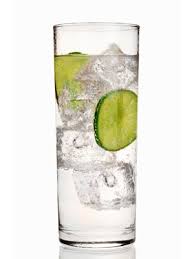
A normal roast dinner ranges from 700-1,100 calories. A standard Easter Egg is about 550 calories. If you have 2 then it’s 1,100 calories. If you went out and had a few drinks then they need to be added in as well. 6 standard gin and tonics add up to about 900 calories while 6 pints of Heineken add up to 1,500 calories. Roughly add up all that you ate and take away your normal amount of daily calories.

Gin and Tonic
A normal Gin & Tonic is about 150 calories

To give an example we will talk about Erin who eats 2,000 calories on a normal day while her weight remains steady. On Easter Sunday she took in 3,200 calories between chocolate, a roast dinner, turkey sandwiches and 5 bottles of beer. That’s an excess of 1,200 calories. The temptation for Erin is to drastically cut her calories over the next couple of days. My suggestion is to spread it out over 5-7 days. If we divide 1,200 by 6 we are left with 200 calories. A drop of 200 calories a day is very achievable without Erin being deprived of any valuable nutrients. Halving the amount of rice/pasta with dinner, a yoghurt instead of a scone at break time, a salad instead of a sandwich at lunchtime or an apple after dinner instead of more traditional desserts can all lead to that 200 calorie drop. 5/6 days of this and Erin will be right back on track with her weight, energy levels and food.

Heineken
An average pint of beer is about 250 calories

To make the drop in calories even easier it can be combined with exercise. Try an extra hard training session in the gym, on the pitch or on the road and you may only have to drop calories slightly for 3 to 4 days.

Be careful not to drop calories too much while adding extra training as the body will find it too difficult to recover as will adding in too many extra sessions.

I hope you enjoyed the extra food and chocolate over the weekend and please don’t feel guilty about eating any of it.

For more advice on nutrition, diet and exercise email fhsperformance@gmail.com. Like us on Facebook at FHSPerformance and follow us on Instagram @fhsperformance.


John

Flexible Dieting – Fitting In Those Treats

I can’t keep up with how often I’m asked if a food is good or bad. It’s such a hard question to answer. The answer is pretty much always “it depends”. How much of it are you eating? What are you eating with it? Are you trying to lose or gain weight? How much else have you eaten that day? Do you like the taste of it? All of these must be considered when deciding if the said food is “good” or “bad”.
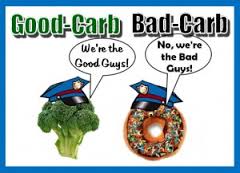
I really don’t think any food should be classed as bad. I said in the last blog that we all need a basic amount of calories to survive. Once a food is providingGood Carb v Bad Carb us with these calories it’s serving its purpose. All foods have a set number of calories and we use those to fuel our bodies and activities. Some foods are very high in calories and so provide us with a lot of fuel. It is when we do not use all the fuel that we put on weight, usually as fat, which is stored energy.

When some of my clients came to me first they were struggling to lose body fat yet insisted they were eating “clean foods” all the time. The problem was they were simply eating too much. Sweet potatoes, grilled chicken, brown pasta, steak, eggs, porridge oats, nuts and fruit are all classed as clean foods. No matter how “clean” it is, eating too much will lead to fat gain, or not losing fat if that is the goal.

To give an example of this we’ll talk about Erin again. Erin needs 1,850 calories a day to stay the same weight. If she eats 2,100 calories a day and it all comes from the clean foods I mentioned above she will put on weight. Whether this is fat or muscle depends on the type of training she is doing, not the types of food she eats. If Erin eats 1,850 calories a day and it is made up of a variety of foods, both good and bad, she will remain at the same weight. This sounds crazy to some people but has made, by far, the biggest changes to all of my clients.

Some people like to mix cheat meals or cupcake-choice-not-cheatcheat days into their diet plans. This is fine if it works but for me I find it very hard to draw the line at where a cheat meal or day ends. It nearly becomes a challenge to fit in as much junk food as possible in one day. This led to being bloated and generally feeling down in myself for letting myself go. The solution I have found to work best is flexible dieting. I know the basic calorie amounts in most foods now and can substitute in a “bad” food for a good food when I feel like I need a treat. An example would be to half the amount of rice I have with dinner so there is room for a couple of biscuits afterwards. It’s obvious that the fuel from rice would be much healthier than the biscuits but doing this once or twice a week still keeps me on track for my calories and allows me to have those treats.
The key to making this work is in understanding how many calories or macronutrients (I’ll talk about these in more detail in another blog) are in a food. Our main aim each day is to hit the calories we need to fuel our activities. There are obvious choices to be made when picking where our calories come from. 200g of normal potatoes will provide us with longer lasting fuel and fill us more than 50g of Haribo jellies yet both will give us the same calories (170). I certainly wouldn’t recommend eating 50g of Haribo everyday while I would recommend potatoes as a healthy source of carbohydrate, yet once a week, this is a simple way of allowing for a treat in place of something else without messing up your diet plan.

How many of us enjoy a takeaway at the weekend? Whether it’s Chinese, Chipper, Pizza or Indian we all need that break. Having a takeaway on a Friday night can throw so many of us off for the whole weekend. We feel like we’ve ruined our plan with bad food and find it hard to get back on track. The simplest way to get over this is to work out how many calories are in the meal. All values can be found through a simple Google search or through the MyFitnessPal app. If a full pizza has 1,900 calories and our daily target is 1,850 then we really don’t need to eat the whole thing. Halving the pizza with someone else would give us 950 calories. This means we just need to eat a little less across the rest of the day to leave room for one big meal at night. That can come from leaving out a scone with our coffee in the morning and having an apple or yoghurt instead, or having a green salad at lunchtime instead of a sandwich.

I don’t expect anyone to get this calorie balance exactly right at the beginning. It takes a bit of experimentation with lower calorie options to fit the treats in. It also takes some discipline to stop us trying to fit a treat in everyday. The goal of flexible dieting is not to survive on McDonalds and Poptarts everyday but to allow us fit in some of the things we really enjoy while staying on track towards our goals. There are obvious choices to be made when it comes to where our calories come from. A large muffin at 11am might have us feeling satisfied for the following 30 minutes but if it leads to a boiled egg and spinach for dinner later that evening then it may not be the wisest choice in the long run.

Flexible dieting allows us to be exactly as the name suggests, flexible with our diet. Trying to survive on brown rice, grilled chicken and broccoli four times a day may seem super healthy but would not be achievable long term. Mixing up where our carbs, protein and fat come from is the easiest way to remain on track and have some variety in our food. Rice, potatoes, pasta, quinoa and bread are all sources of carbs. While some may be slightly healthier than others, a combination of all will provide a varied diet and consistent amount of calories in our meals. Staying on track long term is much more beneficial than eating super healthy all week then falling apart at the weekend. Similarly eating clean for a month then letting yourself go for a week will have more negative effects in the long term.

If you would like to find out about flexible dieting in more detail or get some sample meal plans then contact me at fhsperformance @gmail.com.

In the meantime I suggest you experiment with some foods, enjoy all types of flavours and keep up the training.

John

Balance the Calories to Balance the Scales

Many people claim to follow certain “rules” that guarantee best results when it comes to losing or gaining weight. Some of the rules include no carbs after 6pm, eating protein in the 20 minutes after your gym sessionScreenshot 2016-02-26 11.09.49 ends (the window of gainz!) or the certain supplement you simply must be taking to make sure you get the most from your food/training. How one particular food will help you bulk or the 3 foods to cut out when trying to get leaner. I keep hearing these crazy theories on how best to “cut” or “bulk”. With so many people now trying to get lean, drop body fat, pack on muscle or whatever the case maybe I thought it best to put this together to help everyone achieve their goals.
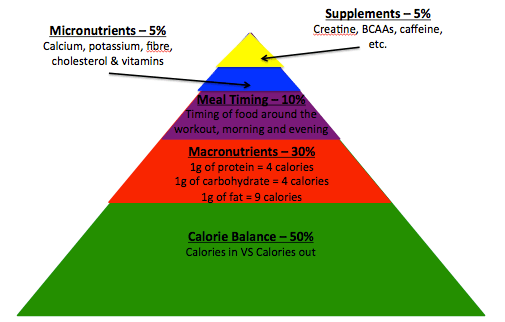
In the diagram above I have put together a simple pyramid of what is most important when dieting for changes in body composition (fat loss/muscle gain). This is a combination of work from Eric Helms and Renaissance Periodisation so I can’t take all the credit. The most important factor is at the bottom and each row of the pyramid decreases in importance as you reach the top.

All too often I see people focusing on the top two or three tiers while completely ignoring the bottom row. I see it as the foundation for all other steps and as many of us already know in other aspects of life, without a solid foundation it can all too easily come crashing down. How many times have we seen friends or workmates start extreme diets, nutrition plans or cleanses before coming to an abrupt end.

Most people’s first concerns are from the top of the pyramid. What supplements should I be taking? When are the best times to eat my meals? Will creatine increase my bench press or help get rid of my chicken legs? Will eating carbs near bedtime turn straight to fat? If I don’t “take” protein straight after the gym will I lose the benefit of everything I’ve just done? Do green tea and spicy foods really speed up my metabolism? Which is better, 3 large meals or 6 small meals?

Focusing on the top 10% may yield some results yet it pales in comparison to the huge benefits that will be seen from sorting out simple calorie balance. Everyday we burn a certain number of calories from our general day-to-day activities and any exercise we do. The amount of calories burned differs from person to person and day to day. It differs between people, as we are all different shapes and sizes. It changes in individuals depending on the various activities we get up to such as work and exercise. You may burn slightly more one day than you do the next. That is why all calorie numbers are based on an average for each day across a full week of activities.

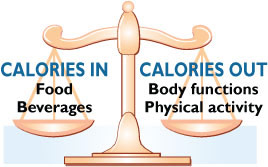
We need a certain number of calories each day just to survive. For beginners it doesn’t really matter where these calories come from. If a female (let’s call her Erin) weighs 68kg and needs 1,850 calorieCalorie Scaless a day to stay at the same weight then she will remain at that weight if she eats that amount of calories. If Erin starts eating extra food and ends up at 2,000 calories each day then her weight will slowly start to increase. An extra 150 calories a day will result in a very slow weight gain. If Erin is not doing any extra exercise or weight training this will result in her putting on fat. If she is lifting weights then the majority of what she puts on will be muscle, very tiny amounts of muscle.

If Erin starts to do extra exercise every day but stays at 1,850 calories then she will begin to lose weight. If all of this exercise is cardio based then she will lose mainly fat but some muscle as well. If she does weight training or a mixture of weights and cardio then she will lose nearly all fat.

Erin’s best plan would be to eat extra calories everyday and balance this with extra exercise, ideally a combination of weights and cardio. Beginners to weightlifting will notice massive gains in strength in their first year. They are in a great position to lose fat while building muscle. This ends up with no difference on the weighing scales but with clothes fitting much looser, extra energy and a more toned look throughout the whole body. It also leaves for that extra flexibility in your diet to fit in a few treats across the week, because let’s face it, we all need those treats!

Many make the mistake of dropping too many calories when trying to lose weight. This is usually done in combination with extra exercise, most of which is cardio based (running, cross-trainer, exercise bike, etc). We must remember that calories are a measure of energy and not weight. We need a certain number of calories to survive. Without enough we will be left feeling hungry and short of energy. The temptation to reach for the biscuit tin or throw a pizza in the oven when hunger strikes is often too much to resist. That is why I would recommend a very small calorie deficit when trying to lose weight.

We must all remember that any extra weight we are carrying was added over a long period of time, often a few years, and so will take a few months to lose if we are to keep it off long term. In the next few days I will post another blog on where best to get our calories from and what the big difference between “good” and “bad” foods are.

If you have any questions in the meantime please contact me at fhsperformance@gmail.com