The Fallacy Of Distance Covered

We’d just gotten the win in our final league game and were gearing up for 2+ hour bus journey.

It put a bit of a positive spin on an otherwise underwhelming league campaign.

We had a few weeks off before our next competitive match and were giving lads the week off training. They were on the tinnies on the way home – a few funny comments made their way up the bus!

I got home late so did up the GPS report the following morning and posted it to the team WhatsApp.

Manager straight in with a message: “Well Done Paul

Paul had a bang average game. Nothing spectacular but no stupid mistakes. His direct marker had a similar game so they pretty much broke even. Two other players had pretty outstanding performance but not a word so I was intrigued.

The manager never really posted much in the WhatsApp and was rare to give out praise so I checked back over the GPS numbers to see what caused this.

Paul had covered more distance than everyone else by about 800m. I think he was on 11.5k. A lot for hurling, especially on a tight pitch.

Was this what the praise was for? Just covering more distance?

It’s amazing how many managers and coaches still look at total distance as a meaningful metric. Especially when we consider how much support is out there around the use of GPS and what is more relevant for monitoring training and matches.

In terms of what’s monitored I’m usually looking at high speed distance, sprint distance, number of sprints, top speed, meters per minute and accelerations/decelerations. Total distance covered is way down the list of priorities.

When using GPS, there are a few main uses for the data we gather:

1. Understanding Game Demands

      By tracking multiple games, we can identify position-specific demands. For example, how much high-speed running does a half-back typically cover? Once we establish an average range, we can tailor preparation accordingly.

      2. Training Activity Analysis

        With a clear picture of match demands, GPS helps assess whether training activities are preparing players adequately. If a midfielder covers ~1,800m of high-speed distance in a game, we can design high-intensity runs (1,600–2,000m) or modified games that replicate this within gameplay, adjusting timings for load and recovery.

        3. Workload Monitoring

        GPS also helps manage player workloads over time. If an athlete covers 1.8k of high-speed running in games and 3–3.5k weekly, maintaining consistency is key. A spike (e.g., 3.2k in one session) may require workload adjustments in subsequent sessions to prevent overloading.

        I’ve heard a lot about misapplications of GPS lately. Largely around players not covering enough distance (what is enough anyway?) or not working hard enough and it got me thinking:

        Is this representative of a broader issue?

        Are we getting distracted from what really matters? Coaching our sport?

        I recently got a text (a little out of the blue) from a buddy that works full time in coaching:

        “I honestly think GAA is gone mad”

        I asked for a little more context so he replied:

        “Everyone wants the optical stuff to be in place and look the part, but no one looking at the actual standard of coaching that happens on the pitch”

        Well that got me thinking.

        How many clubs invest heavily, in terms of finances, time and energy into various “supports” like wearable devices, monitoring apps or systems, cameras, VEOs, analysis software, etc.,?

        How many can really justify the use they get from it but will pay so little attention to the quality or upskilling of coaches?

        If you had nothing but a whistle, a few cones and some pen and paper, you could be an incredibly effective coach. You could massively improve your team, at the majority of ages and levels, across codes.

        Quality activities.

        Appropriate drills or games.

        Modifications suited to the individual or team.

        Questions.

        Cues.

        Guided Reflection.

        Feedback.

        All free of charge but effective!

        Do teams try and distract from the lack of quality coaching by trying to provide an illusion of professionalism by putting other stuff in place? Are managers distracted by “shiny new toys” or just sold stuff they think is important?

        Spending thousands on GPS to call out players who “aren’t working hard enough” because then only cover 5-6km in a game while someone else has covered 8km. What other contributions have they made to a game in terms of scores, assists, meaningful runs, dispossessions, tackles, etc.,

        Do they even know what “working hard” is? Has it been identified or does a manager simply want busy fools who run around, cover loads of ground, clock up the distance but have minimal actual impact on the game? Could we instead provide them with some guidance on what hard work is relative to their position and role?

        Conversations with individual players or in small groups based on positions. What do we want our inside forwards to do? With the ball, without the ball, when we’re in possession in certain parts of the field, on our own or opposition puckouts, etc.,?

        If we provide clear information about these situations to players then it’s much easier to praise when done well or ask for better when it’s not. Guiding their improvement in these situations can be done through a combination of specifically designed games, individual feedback or examples from actual game situations. This is where some of the tools can be useful by showing clips or providing some objective stats.

        Technology should support great coaching, not replace it.

        The tools are valuable when they enhance decision-making and player development, but coaching is about more than just numbers or data. The best coaches focus on creating effective learning environments, developing relationships, and making informed decisions based on both data and experience. They empower players to make the best decisions in the toughest of situations, lead in a variety of ways and challenge all around them to make things better. Technology should be a tool that refines this process; not a crutch that replaces good coaching judgment.

        The best coaches don’t just track effort; they guide it.

        They don’t just collect data; they make sense of it. And they don’t just train players to cover more ground; they teach them how to impact the game.

        I challenge you to trial some of the following in your next few sessions:

        • Track how long you spend talking to a group of players throughout the session. What percentage of training is spent listening rather than doing?
        • Count how many times you ask questions versus how often you give instructions. What is the ratio, and how can you shift the balance to encourage more player thinking?
        • Keep a tally of how often you give individual feedback. Is it actionable for the player, or just general encouragement? Aim for feedback that directly helps them improve.
        • Observe a drill or game without intervening. Are all players actively involved, or are some on the fringes? If engagement drops, how can you adjust the activity to keep everyone challenged?
        • Before delivering an instruction, challenge yourself to explain it in 30 seconds or less. If it takes longer, simplify. Are your players spending more time listening or playing?
        • Track how often you give positive reinforcement versus corrective feedback. Are you catching players doing things well, or only focusing on mistakes? Aim for a 3:1 ratio of positive to corrective feedback to build confidence and motivation.

        What is more impactful? Any of the above versus the expensive coaching “aids”.

        Adolescent Nutrition – #TheHungryTeen

        Intro

        The questions is often asked, “What is an appropriate age to introduce young people to resistance training?”. There are a number of factors to be considered when answering this, all of which are outside the scope of this article, but an interest in resistance exercises is often coupled with a heightened awareness of nutrition practices. While various forms of resistance training is new to many adolescents, eating food will not be as it’s something they’ve done their entire lives. Their relationship with food, and the impact it has on their body increases in importance during adolescence as fuel needs increase and adolescents become more aware of their body image. Messaging around food, nutrition and healthy eating also increase during this period and it can be difficult for both adolescents and their parents to identify what is important, what is relevant and how to introduce discussions around food in general. This article will discuss what’s important for adolescents as they progress through the stages of development, how to begin talking about food, what foods to eat and how much of each type. Also, if you want to begin introducing your adolescent to cooking, you can find a free adolescent friendly recipe book here.

        Adolescent Development & Stage Of Readiness

        Types of development:

        1. Physical Development
        2. Cognitive Development
        3. Social-Emotional Development

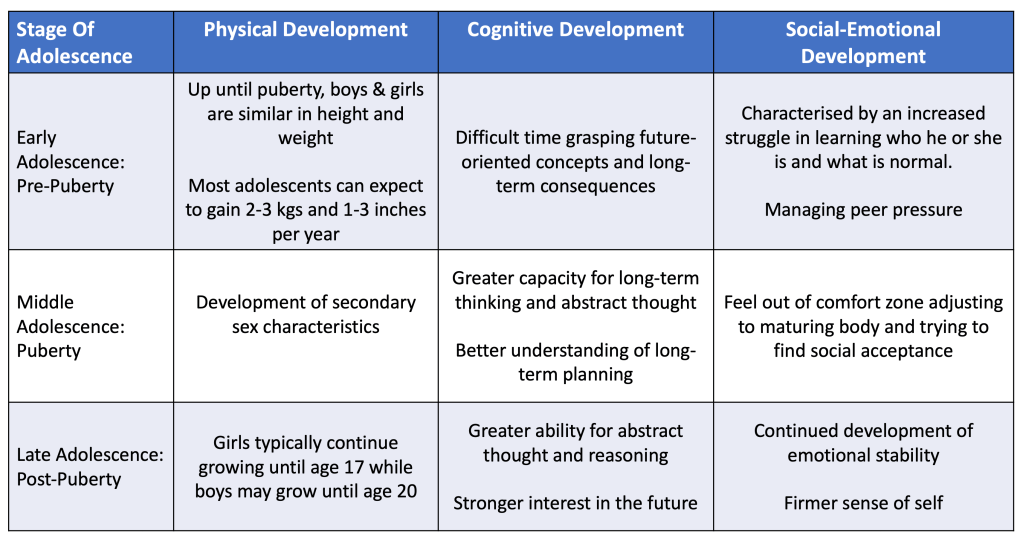
        Before puberty there are minimal differences in terms of height and weight among males and females. As they reach puberty (which females typically reach first) this changes dramatically in terms of size, strength and energy needs. While there are typical age ranges that each change happens, this will differ between individuals so no specific times can be recommended in terms of what age each change or conversation should happen.

        Stages Of Development:

        1. Early Adolescence: Pre-Puberty

        Before puberty, children have difficulty thinking about the future, particularly long-term implications of their actions. Explaining that eating a wholegrain piece of bread will be much better than a donut for long term health is difficult to comprehend. The ability to think long-term (and more abstractly) expands as they enter puberty and they can begin to consider some long- and medium term consequences. In terms of social-emotional development, pre-pubescents look to forge an identity for themselves and increase in their desire to “be normal”. This leads to a change in their social influences where friends and peers have far more of an impact and parents less so.

        1. Middle Adolescence: During Puberty

        Girls generally hit puberty 12 months before boys but there will be quite a bit of individual variance. Both males and females will experience major growth spurts, increased perspiration and an increased production of oil in the hair and on the skin. Adolescents will develop a greater capacity for future-oriented and abstract thinking and so develop a greater awareness of long term consequences. This can help with their understanding of how the food they eat now impacts them at a later stage.

        1. Late Adolescence: Post-Puberty

        Boys’ growth spurts will generally last longer than girls’ and may continue right up to age 20. This is an excellent time to develop the valuable skill of delaying instant gratification, by not using food as a reward. Encouraging adolescents to develop the ability to say “no” in the short term in favour of long-term or delayed success is a huge factor in supporting healthy eating habits that stay with them throughout their lives.

        Table1 – Stages Of Adolescent Development

        Talking About Food

        As a secondary school teacher, I recognised how difficult conversations with adolescents can be. The key is not to approach a teenager as if you are approaching another adult, while still not approaching the topic in a condescending or “lecture-style” format. It is too easy to assume an older teenager has a level of maturity that is similar to your own, but no matter how mature they may seem, pushing their emotional and cognitive boundaries may backfire and set the stage for unhealthy habits and thoughts regarding food and themselves. One small tip is to remember that, for the teen, food is fun. This is true in terms of taste, but also true in terms of the social interactions that often surround food and eating.

        The best time to begin talking about food with adolescents is to wait until they begin asking. Children have a natural curiosity and will ask lots of questions, largely based around “Why?”. Engaging your adolescent in the preparation of food can set the scene for them to ask questions and gives a “focus” that most questions are likely to be based around. This can help you guide the conversation around specific topics while still giving your adolescent a degree of control or autonomy.

        Table 2 – Guides On What To Say To Pre-Adolescents

        It is also important to choose your words wisely and plan some responses out in advance. Loaded word choices and labels such as “bad” or “you should never…” can lead to black and white thinking around food and potentially cause poor relationships with specific foods alter in life.

        Table 3 – Guides On What To Say Mid- Post-Adolescents

        Fuelling The Adolescent & Consequences Of Long-Term Energy Restriction

        Total energy needs (calories) are highest during adolescence compared to any other time in life. Growth rates are also quite high which places further energy demands on the body. Nutrient needs and physical growth are tightly intertwined: as an adolescent grows, his or her energy needs also need to increase. Meeting their individual needs is essential for the achievement of optimal growth and development, and failure to do so can inhibit physical and cognitive development, not to mention sport performance. In simple terms, adolescents require fuel round the clock. It’s perfectly “normal” for them to be hungry an hour or two after a meal, and an hour or two after that, particularly during peak growth phases.

        Protein Needs

        Protein intake is important for the maintenance of existing lean body mass and any increases that happen when growing. Protein requirements are highest for females aged 11 to 14 and males aged 15 to 18. The majority will need 1 to 1.5 g/kg of protein to ensure they growing adequately.

        Carbohydrate Needs

        There are no definitive guidelines on carbohydrate intake for adolescents as needs vary wildly based on activity levels. A rough guideline is to aim for 50% of total calories to be supplied by carbohydrates. When choosing carbohydrates, the majority should come from high-fibre, nutrient dense options such as fruit, whole-grains, potatoes and rice.

        Fat Needs

        Again, there are no specific recommendations for fat intake but a general guideline of less than 30% of total calories with less than 10% from saturated fat is okay.

        Micronutrients

        While all micronutrients serve specific needs in the diet, some will be of more importance to adolescents than others. These include

        • Calcium – bone formation and growth
        • Vitamin D – Absorption of other micronutrients
        • Iron – Transport of oxygen to where it’s required in the body
        • Zinc – Growth and development, and immune function
        • B-Vitamins – Harvest energy from the foods that you do eat

        Impact Of Long-Term Calorie Restriction (Under-Eating)

        Increased activity levels and growth lead to very high energy demands. Although many adolescents seem like they’re constantly eating it’s rare to see an active teen put on excess weight. It’s important to monitor an adolescents’ energy levels, mood, fatigue and physical appearance in case they are in a state of energy restriction over a prolonged period. Some of the consequences of long-term under-eating are outlined below:

        • Stunted growth
        • Delayed onset of puberty
        • Menstrual irregularities
        • Poor bine health
        • Vitamin and mineral deficiencies (and the specific negative consequences for each)
        • Increased risk of injury
        • Increased risk of disordered eating

        Building The Ultimate Plate

        This section will look at how to put together some meals that meet the majority of adolescents nutrient needs while not compromising on taste or enjoyment.

        The four key factors that should be included on each plate are:

        • Lean Protein Source
        • Quality Carbohydrate
        • Fruits & Vegetables
        • Healthy Fat
        Table 4 – Examples Of Each Food Type

        Example Meals

        • Lean Beef Burger, Wholegrain Bap, Lettuce & Tomato, Roast Maris Pipers
        • Grilled Salmon, Steamed Mixed Vegetables, Boiled Basmati Rice
        • 3 Egg Omelette, Spinach, Tomato, Homemade Brown Bread
        • Pasta, Tomato Sauce, Chicken, Mixed Peas & Sweetcorn
        • Porridge Oats, 0% Greek Yoghurt, Mixed Berries, Chia Seeds, Water or Low-Fat Milk

        Summary

        Overall, it’s important to be aware of an adolescents’ energy and nutrient needs but counting calories certainly isn’t necessary. Monitoring energy, mood, fatigue and general appearance is usually enough to ensure teens are adequately fuelled. Having open conversations about food, especially in terms of their specific likes and dislikes are key to finding out what works and doesn’t for each individual. Constantly being hungry or eating isn’t a sign of anything being wrong but is a sign that energy needs are quite a bit higher. While adolescents can “get away with” eating more “junk food” due to their increased energy burn, it’s still important to build a foundation of healthy eating based on the options above before adding potential treats on top. Try to feed curiosity about food and nutrition with open questions and options where they can source further information at a level they’re able to understand. It’s also important to include adolescents in the preparation of food both for the development of their cooking (which is an important like-skill) but also to appreciate the effort that goes into preparing all of the food they have been eating over the last 12-18 years.

        If you’ve any questions on the above or would like further information then feel free to contact me at @fhspeformance on Twitter or Instagram.

        What I’ve Learned About MAS

        6 years ago today I wrote a piece about High Intensity Interval Training and how it could be used for GAA training. It had an accompanying Drive Folder with 10 weeks of suggested sessions, a fitness test tracker and MAS calculator for dividing your squad into 3 different groups. Since then I’ve coached 5 different teams in person and consulted with another 6. I’ve learned a bit since through trial and error of a few different sessions, approaches and conversations with other coaches. These thoughts are outlined below:

        It’s not just 15 on 15 off

        The paper that launched a thousand sessions

        A lot of people automatically assume MAS runs are 15 seconds of work with 15 seconds passive recovery covering between 70 and 85 metres. Often done in 2-3 sets of 8-10 reps, although I’ve heard of a few extreme examples going up to 3 x 16. The 15:15 scheme is just a variation of MAS based training known as the Eurofit method and came from the suggestion in Dan Baker’s paper that popularised so much. Like Helen of Troy, it was the paper that launched a thousand 15 on 15 off sessions. Although the most popular, MAS training can be done at any variety of intensities, over varying distances and with varying types of recovery. Realistically, any intensity from 80% up to 120% will be effective once you do it with appropriate work to recovery times and have a solid justification for why you’re doing it. A variety is generally better for both yourself as a coach and for the players so they don’t get too fed up of the same sessions. You can also use MAS to gauge suggested completion times for set distances, such as 300m or 400m reps, instead of prescribing distance from time. If you want to see a mix of a few different sessions based off an individual’s MAS, you can request a Calculator & 8 Sessions Here.

        Appropriate Tests

        I nearly always went with a 1k test over a loop. About 2 and a half laps of a pitch. Plenty of others also went with 1k but with 100m shuttles. Once you’re keeping with the same test then it didn’t really matter. You build up your own norms and ”standards” over time, try not to get too focused on just hitting 1k targets while neglecting all other things then use some of your mean group times to calculate distances for shuttles. Generally worked fine but after developing a bit of a better understanding of aerobic exercise, we can definitely do better. A few key guiding principles:

        • Minimise Turns
          • Try do it on a loop where possible
          • Broncos are not a bad test to use overall, it’s just not great for working out MAS as the turns bring in too much of an anaerobic component
          • Same with 100m shuttles. The turns make some athletes seem more or less fit (aerobically) than they actually are.
        • 4 to 6 Minutes Is Best
          • I had a few players go under the 3 minute mark for 1k. I think 2.52 was the best. That’s very fast and impressive but it’s just not long enough to be as aerobic as we want it to be.
          • 1k might work for players who are quite unfit
          • I generally aim for something that will be around the 5 minute mark based on the group you’re working with. Currently 1400m with the main teams I work with
          • 1500m or 1600m might be better for players more on the elite end.
          • 1200m might work fine for players who have more development to do
        • Keep A Consistent Surface
          • The difference in surface from a typical pre-season test in January to the same pitch in June can be very different. This will make your time trials a nice bit quicker. If you just want to give players a boost in confidence, then work away. Otherwise, aim to use a surface that is consistent across the year.
          • Most clubs have walking tracks now so just set out a couple of markers that you can reuse. 1300m to 1500m (ish) in distance
          • If necessary, go to a 400m running track and do 3.5 (1400m) or 4 laps (1600m). Just make sure you book in the same track for the re-test a while later.
          • If you have a suitable loop near your pitch then feel free to use that one too.
        • Other Testing Options
          • You can calculate MAS scores from the beep test or yo-yo test. I wouldn’t go with the running pace of the last successful stage as it’s a little too reductionist. Nathan Heaney (The Conditioning Consultant) has some good spreadsheets to help make these conversions a little more accurate.

        Does It Work?

        In a word, Yes. Every team I’ve worked with, both in person and as a consultant, have made significant improvements. I’ve also spoken with at least another 20 coaches who have used the prescribed 10 weeks to make similar improvements across a range of groups. Male, female, hurling, football, adult or underage. Two teams have used the sessions as their main block of conditioning and won senior county finals. I’m not saying it’s purely down to aerobic fitness based off shuttles, but it does provide a logically progressed system. I would also be wary of using this with underage teams. There are many factors (that I won’t go into now) that impact decision-making around isolated running with younger players. I’ve no set rules with this but you do need to consider chronological age, training age, broader environment and culture, aims for the group and season, etc., before deciding if it is right for your group or not.

        Do I Still Use It?

        Not really. I already said I’ve changed the initial test from 1000m to something a little longer. I also moved away from the initial 3 minute reps done in shuttles as they were incredibly boring for both players and the coach. Having dug a bit deeper into aerobic fitness, I also think the further you move from 100% of MAS (in either direction) the less appropriate it is for players, especially those with differing profiles (more on this below). I’d much prefer to build up the volume of high speed running metres (anything greater than 17 km/h) progressively over time than set distances that are specific to the athlete’s current MAS. This can be achieved by adjusting rest intervals accordingly. If I had access to live GPS and/or live heart rate, I’d try get as much as possible from game based scenarios with “top-up” runs to ensure players are adequately prepared. I think the suggested sessions can be really useful for a team with minimal aerobic development or those relatively new to structured training, but I definitely wouldn’t be relying on it for a team who have consistently well applied training for a few years.

        RPE Is Great For Longer Reps

        As I said, the longer shuttle reps can be really boring. I also think moving more than 15% either direction from MAS can lead to too many individual variances. For this reason, I much prefer to use RPE for easier runs. Players can form mini groups and work to a similar pace. If some can track HR, then that’s really helpful too. Generally for longer reps (3-5 minutes), I don’t want them working harder then 6/10. They may find it difficult to identify and control in the first few sessions but it’s well worth trying to develop for the longer term benefit. Monitoring their breathing rate and just asking how they feel should help to identify accurate RPE ratings. Once this is developed, you can use it for a variety of aerobic interval sessions such as 5 x 3 minutes, 5, 4, 3, 2, 1 minutes progressive, 30-20-10 Fartleks, etc.,

        What Is “Aerobic Speed”?

        Fair enough to the commenter, MAS may not be the correct term. Velocity at VO2 max is or vVO2 for short. It is the running velocity associated with an individual’s highest rate of oxygen consumption. We obviously can’t test that completely accurately via timed laps of a pitch but we try to estimate it through the above suggested field tests. Improvements in vVO2 or covering 1400m in less time are proxy measures for either increased VO2max or greater running economy at the same VO2. Either way, it’s largely irrelevant for what we want. The aim is to be aerobically fitter as that allows us to cover greater distance and complete more “game actions” (hat tip Raymond Verheijen) with less fatigue. I understand that an awful lot of “game actions” are not aerobic in nature and we should train them accordingly through greater specificity, however, the ability to recover from these is largely driven by greater aerobic fitness. Also, the more aerobically developed we are, the less fatigue we accumulate over the course of a game as each action requires a lower percentage of energy cost.

        In terms of MAS being developed for track cyclists (1000m Time Trials), I honestly don’t know. If anything, they’re more likely to use Maximal Aerobic Power (MAP), Functional Threshold Power (FTP) or a series of measures to create an overall power profile. I have heard of an ultrarunner using his vVO2 to prescribe the majority of his training so it is useful for distances much longer than the 4-6 minute range. Either way, it’s just a measure to help guide what we running we do in training and allow us to monitor improvements over time. Not necessarily an overall system that all of your training should be based around.

        What’s Missing?

        I already said high speed running is really important as, based on the aerobic development of some players, they would not achieve this even at 120% of MAS. Therefore, we need to sprinkle in more running at higher speeds and adjust recovery times accordingly. Over the last two seasons I have tried to implement a “Fast to Fit” approach. We begin with more high speed running through shorter bouts and will allow players to self-select recovery. Tempo intervals (Charlie Francis style) with long walk recovery allow players to complete the suggested distance and find their own recovery. An example of this would be to begin with 30-50m reps with a slow walk back. This then progresses out to 100m up to 150m reps over time as we accumulate total volume.

        I mentioned in the original article that hamstrings require high speed running volume to reduce the chances of injury. Realistically, they need to move a lot faster than that on a regular (at least weekly) basis. You should be incorporating sprints into your training. I’ll probably write another piece on that at some stage though and go into more detail. Alternatively, you can just get my Need For Speed 6 week plan and run it a few times consecutively.

        Profiling of players is becoming increasingly popular of late, largely through the work of Gareth Sandford. It essentially boils down to the grouping of athletes based on what type of training they best respond to. The main categories are aerobic (love the longer stuff but wouldn’t have a great top speed), fast twitch (very fast and explosive but really struggle with longer reps), and hybrid (mixture of the two). We can’t completely individualise training for everyone but there may be some times that we can split players into different groups, especially during off-season or the pre-season sessions they complete away from the group. A couple of examples:

        Fast Twitch Dominant

        • Damien is your classic fast-twitch. Very fast and explosive. Great vertical jump, sprint times and sidestep. Longer reps (anything longer than 2 minutes) absolutely wreck him. Instead of forcing him through these, I’ve given him extra tempo runs and dribbles to complete for his individual sessions.
        • When we complete 5, 4, 3, 2, 1 as a group, he will do dribbles and shuttles while others do the 5 minute and 4 minute reps then jump in for 3, 2 and 1.
        • We also give him some bike session to complete that are largely sprint based. 5-10 minute warm-up, 6 x 10s sprints with 50s easy pedalling followed by 6-10 reps 30s hard with 90s recovery.

        Aerobic Dominant

        • Shane is very aerobic in nature. Has a large work capacity and rarely gets overly fatigued. He lacks the absolute top speed of other players though.
        • While they may not get much development from the harder shuttles, they still need to be prepared for these in games so will still complete them.
        • In pre-season we will give Shane some longer type runs to complete. 6-8k with 4-6 x 100m hard at the end.
        • Off-feet conditioning sessions will be longer in nature, such as 5 x 3 minutes, but also with shorter rest as they can recover from these efforts much quicker.

        Conclusion

        I’ll hopefully keep learning more and write a further update in another 6 years with loads of changes. I’m currently intrigued by Critical Speed/Velocity, HR based training and how best to leverage speed work for general work capacity development.

        If you require any guidance for your own team this year, then feel free to get in touch via email at fhsperformance@gmail.com

        Injuries & Nutrition

        Most athletes want to know how best to fuel themselves for training, games and gym sessions while also focusing on how best to recover. You can find out more about suggested fueling strategies here and can read up on nutrition for recovery here and here. While fueling for performance is obviously important, we often tend to neglect optimal nutrition when recovering from an injury.

        Injuries occur to a variety of body parts and can be due to a number of factors (discussing these is outside the scope of this piece). All injuries will, however, impact on performance in games, training, and often, day to day life. Continuing with nutrition practices that are suited to full training and work schedules is not ideal and can lead to negative consequences when returning to play. Below we will outline the three main aspects to consider nutritionally when injured and how best to approach them.

        Nutritional Considerations When Injured:

        1. Aiding recovery on injured area
        2. Adjusting to change in energy demands
        3. Psychological impact of injury

        Aiding Recovery

        Daily protein requirements, and how to meet them, will be discussed in more detail in the future but meeting these requirements is a key element of optimising recovery. General recommendations for protein intake range from 0.8g to 1.2g per kg of body weight. This suggests an 80kg athlete would need 80g of protein a day which roughly equates to 1 chicken fillet, a pint of milk and a ham omelette (with 3 eggs). Athletes involved in resistance training are recommended to consume considerably more, aiming for 1.6g to 2.2g per kg of body weight. An 80kg athlete should then be aiming for 150g to 170g of protein per day which is evenly spaced throughout. Trying to have a palm-sized portion of protein at each meal is the best way to meet these requirements. Aim for at least 4 different servings of the following options per day with 5 being optimal.

        Examples of a palm-sized portion would be:

        • 1 chicken fillet
        • 3 eggs
        • Fillet of steak
        • 1 salmon darne
        • 2 pork chops
        • 2 slices of ham
        • 1-2 turkey burgers
        • Large glass of milk
        • Scoop of whey protein

        Foods higher in omega-3 polyunsaturated fatty acids, such as salmon, may help to reduce inflammation while these can also come in supplement form.

        Vitamin D is another potential supplement to consider as it helps us absorb many nutrients from our food.

        More information from Close et al here.

        Change In Energy Demands

        When training and working hard we can burn a large number of calories. A typical player’s schedule can include 1 match, 2 collective pitch trainings and 2 solo gym sessions a week. Combine this with a busy job or generally active lifestyle and a lot of food will be required to fuel everything. Larger players, who play around the middle third in hurling and football can easily expect to burn upwards of 3,000 calories a day, and even more on days of particularly hard games or long trainings (O’Brien et al reported that gaelic footballers burned 3,700 calories a day during a typical pre-season week). Most players have no need to track exact calorie intake but will intuitively eat close to the right amount based on hunger and appetite (although under-eating can be a major contributor to injuries). Major changes in training load (such as the first few weeks of pre-season) will often lead to increases in hunger and a need for larger portions or an extra meal/snack per day. While often unaware, players set portion sizes and meal amounts based on their individual calorie demands for a busy playing schedule. These habits can be difficult to break when there is a major change in activity levels such as injury or the season-ending. Injury is a particularly difficult time to manage as it comes on suddenly, allows no time for planning and will generally lead to entirely different energy demands than the majority of other players.

        Players tend to either continue eating as normal when injured – which leads to excess weight gain (predominantly fat) or majorly cut calories which leads to a drop in weight and slows the healing process. Trying to find the mid-range between these two options is key to optimising recovery and being in decent shape when returning to play. The most straightforward way to find this mid-range is either to cut your carbohydrate portions in half or eliminate carbohydrate from 1-2 meals per day and replacing it with extra vegetables. If you usually have a cup of rice with dinner then drop to half a cup. Drop from 2 large potatoes at dinner to 1. Have half a bowl of porridge instead of a full bowl and add some fruit or a boiled egg. Try have a salad bowl with a small bread roll at lunchtime if you normally have a large filled roll. Adding extra vegetables or salad to your meals will help fill your stomach and plate so you still feel like you’re eating the same as before.

        Psychological Impact

        While not directly connected, our brains and stomachs certainly have an impact on each other. An injury can change a lot of our normal behaviours such as activity levels, going training, meeting teammates, playing matches, etc., When feeling a bit down or with a lot of unexpected free time on our hands we can crave foods that are both high in calories and low in nutrients. Binging on comfort food or “mindless eating” are major contributors to unwanted weight gain and can make a return to competition even more difficult than it needs to be. We can take a few proactive steps to try and prevent these from happening.

        Preparing some meals in advance that are high in protein and contain a lot of vegetables will lessen the chances of you grabbing high-calorie convenience foods when hunger strikes. It may also be a good time to learn, or improve on, a new skill, such as cooking, to fill your newly found free time.

        Trying to get in some form of activity is also a help in filling free time and creating an extra calorie demand. Doing any rehab exercises at collective squad sessions can help stay integrated with the rest of the team and show management you’re eager to return. Going for walks or any other type of training will also help when returning to play and make room for some “treat foods’.


        Bonus Tip – Never Waste An Injury!

        What we mean by never “wasting” an injury is using the time away from traditional training to focus on a weakness that’s not affected by the injured area.

        If you’ve injured an ankle, then you can still focus on upper body strength.

        A broken thumb/wrist can still allow you to increase aerobic capacity through running or on an exercise bike.

        Injured shoulder muscles may still allow you to build up lagging leg muscles.

        A pulled hamstring may still allow you to spend a few weeks bringing up a lagging ‘core’.

        Other injured areas will generally still allow some form of training to be done. This can help to increase some aspects of performance for when you return, allow you to do some form of training (which can be completed at the same time as the rest of your squad), and allow for some extra calories to be consumed.


        If you have any specific questions on nutrition around injuries or would like another issue addressed then contact me at fhsperformance@gmail.com

        GAA Nursery Plan

        ——-Folder of 10 Sessions Here——–

        Mol An Oige“Mol an Óige agus Tiocfaidh Siad”
        As most teams head into pre-season we are all wondering about how best to prepare our adult teams for the coming year, we often fail to realise that our results will be the culmination of many years of preparation. With the exception of a few outliers, it’s very unlikely that any adult player has only recently begun playing GAA. With potentially 20 years of preparation behind many adult players, it’s worth making sure our underage pathways are sufficiently structured to support their journey to the top-level (or whatever level they decide to aim for). Ensuring your current adult teams are well prepared for the upcoming championship is an obvious priority in the majority of clubs while also ensuring there will be players, hopefully of high quality, to populate teams in 10, 15 or 20 years.

        Setting up a nursery in your local club brings with it many benefits on top of the obvious development of young players (which can often become a secondary or tertiary priority in particularly successful nursery structures). Some of the key benefits, and will be addressed in more detail below are:

        1. Development of Fundamental Movement Skills
        2. Recruitment of New Players
        3. Recruitment of New Coaches
        4. Showcasing Facilities and Structures

        Fundamental Movement Skills

        If you wish to skip over the benefits then scroll to the bottom of the page where you will find suggestions on how to structure your own GAA (or any other sport) nursery.


        Development of Fundamental Movement Skills


        Fundamental movement skills fall into three categories. Locomotor, stability and manipulative. Locomotor skills involve movement of the child themselves through motions such as walking, running, jumping, side-stepping, hopping and more. Stability skills are balancing and landing. Manipulative skills involve the controlled movement of something external to the child (like a ball) such as throwing, kicking and catching. Ideally these skills should be developed from ages 5 through to 9 or 10 but unfortunately do not receive enough attention (for a variety of reasons). Irish children were found to have poor levels of FMS with 90% lacking competency through the full range of skills. This has many knock-on effects, which include a decreased likeliness to participate in physical activity in later life.

        Fundamental movement skills provide the base for all sport-specific skills. If we pick a skill from hurling, such as the handpass, we can find many underlying fundamental movement skills necessary for it to be successful. Throwing, catching and striking with the hand are obvious but when we look at hand-passing in the context of the game we also see how important running, dodging, side-stepping and landing can be as we add in movement and opposition. Developing these fundamental skills would ideally be done primarily through play and exploration with tiny bits of instruction mixed in. This will be explored in greater detail below.


        Recruitment of New Players


        The competition between sporting organisations to recruit new players is constantly increasing. There is a much greater choice for children (and their parents) to choose from in terms of what activities they can try out. The traditional sports of GAA, Soccer and Rugby have always had somewhat of a competition for players while still co-existing in many of the same towns and parishes. Recent successes at the international level of rowers, middle distance runners and hockey players coupled with the growth of part-recreational, part-competitive activities such as Martial Arts and Crossfit have increased the options for physical activity participation. Many soccer leagues have also moved away from the winter period and tried to base most competitions around the summer months. This has led to many organisations recruiting at a much younger age than in previous years.

        There are many ways to recruit new players to your local GAA club but a combined approach that targets both parents and children generally works best. Social media campaigns through Facebook, Twitter and Instagram will inform the majority of parents of when everything is scheduled. Updating social media platforms weekly with news of particular events, pictures and videos of various activities and updates on potential changes in time help to keep parents informed. Recruiting children will often work best through the local primary school (see below for creating stronger links with the community). Flyers with information on when the nursery sessions take place should be given to every child, particularly those in infants classes. When these flyers are given out by well-known GAA stars from the locality it can also have a much greater effect on the children and their motivation to attend. If the local school will allow, then providing a sample sesion of fun games to the children can also serve as an enticement to attend the local nursery once it begins.


        Recruitment of New Coaches


        We may lose sight of this at times, but essentially, volunteerism is still the primary driver of the GAA. Without volunteers then we have no one to carry out the many tasks from facility preparation & maintenance to coaching the majority of teams while still ensuring all administration and fundraising is up to date. Recruiting all of these volunteers can be quite difficult. There are many potential barriers, particularly for those with no previous links to the GAA, when looking to volunteer at a new organisation. Perceived lack of knowledge in the sport; no coaching/teaching experience; not knowing anyone currently involved; fear of criticism; not recognising own strengths; are some of the common reasons people do not volunteer as coaches. The majority of people reading this will have experience of coaching and feel relatively comfortable getting involved. For many, however, it will be the most alien thing imaginable to them. Making the steps from, no affiliation whatsoever to a potential coach, as easy as possible is key when recruiting new volunteers. Entering into the world of GAA coaching is particularly daunting as the specific skills can seem quite complex, group management may seem impossible at the outset and the long-term time commitment may also serve as a deterrent. Encouraging parents of new/potential players to become involved as assistant coaches, or even to participate in the sessions themselves, may serve as a way of introducing them to the club and the local community. Beginning with parent and toddler/child sessions serves both as a support for younger children who are new to the sport, but also for parents who are new to the community. Many parents on their first few journeys to the GAA pitch can feel a bit excluded and awkward as they watch on from the sideline and wonder who to make small talk with. Including parents in the activities gives them a purpose while present helps create topics of conversation with other parents and creates an opportunity for parents and children to be active together.

        Setting up tea/coffee stations for parents as they watch underage training or a fruit station afterwards also creates a space for people to congregate. This allows a “Recruiter” to focus on a specific area as they try to encourage people to volunteer.

        Bronze Award

        Other options for recruiting new coaches include setting up a rotation system for the U15, U16, U18, U19 team to attend and help out or serve as assistant coaches. Encouraging Transition Year students from the locality to engage in the Gaisce President’s Award may also serve as an incentive to recruit coaches. Assisting as a coach for 13 weeks of 1-hour sessions can count towards either the ‘Learning A New Skill’ section or ‘Community Involvement’.


        Showcasing Facilities and Structures


        Many GAA clubs around the country boast excellent facilities yet people new to the locality may be unaware of what is on their doorstep. Creating links with local primary schools through Go-Games tournaments after school or Open Mornings on weekends will help in promoting the facilities already in place. Organising a fun morning that combines GAA with other fun/recreational activities will show parents what the locality has to offer both their children and themselves. Floodlit areas, astroturf pitches, indoor halls, gyms, walking tracks and outdoor play areas are examples of the foresight, work and dedication done by many GAA volunteers in the past. Utilising these for current members while also highlighting their existence for potential new members can help clubs to grow in the future.

        Hand-Pass-skillcard_09_aw-1

        Setting Up Your Nursery

        I mentioned above that Fundamental Movement Skills are the building blocks of all future sports skills. For example, a handpass in hurling can include Throwing, Catching, Striking with the Hand, Running, Jumping, Landing, Side-Stepping & Dodging as we include it in the wider context of the game. Developing these skills in younger players (ideally between the ages of 5 and 9) makes learning sport-specific skills much easier in the future. As time develops, hurling or football skills can be included along with FMS. Using basic throwing and catching games also helps to develop game sense in younger players as they may not possess the necessary sports skills to apply to hurling or football games.

        If You Can't...

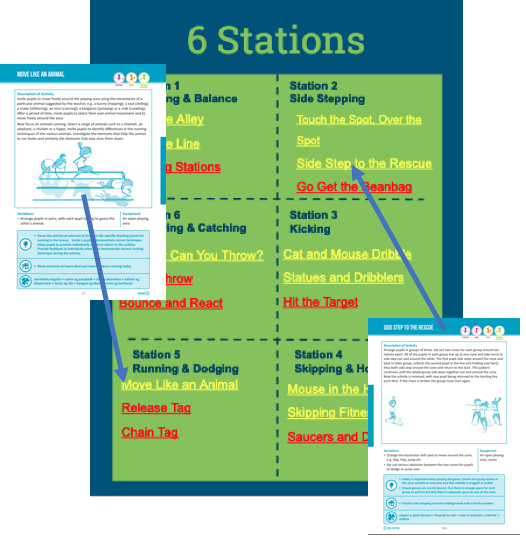
        Below is a suggested structure for how to run a nursery session through station based coaching. Each station focuses on a specific skill. A coach (or two) stays at a station. Each group of children spends 8-10 minutes at a station before moving onto the next. The coach (or coaches) remain at the station. This makes it easier for a coach as they only need to be comfortable with 1-2 skills and 2-3 games which are repeated for the session. Children also experience a variety of skills through the medium of games with minimal coaching. Exploration of the skills is key at this stage.


        Screenshot 2019-02-24 at 20.41.33

        Each of the underlined names listed below is a hyperlink to a description of the game. As you move further through each of the documents you will find links to descriptions of the skills and videos that explain them in greater detail.

        Screenshot 2019-02-24 at 21.33.39

        Advertisement

        Notifying people that your nursery is beginning can be done through a variety of mediums. Social media platforms such as Facebook, Instagram and Twitter will reach the majority of parents while giving flyers to children in schools may also help children to ‘remind’ their parents that it’s beginning. If the local school allows, then a practical demonstration of some games will serve as an excellent advertisement of what’s to come. If local adult GAA stars are available to deliver flyers or participate in games then it may also work as a further incentive.

        cof

        A folder of 10 suggested sessions is included here!

        All games and skill descriptions are taken from the excellent Move Well Move Often primary school PE programme developed by the PDST. It is comprised of three books which make up skill descriptions and games.

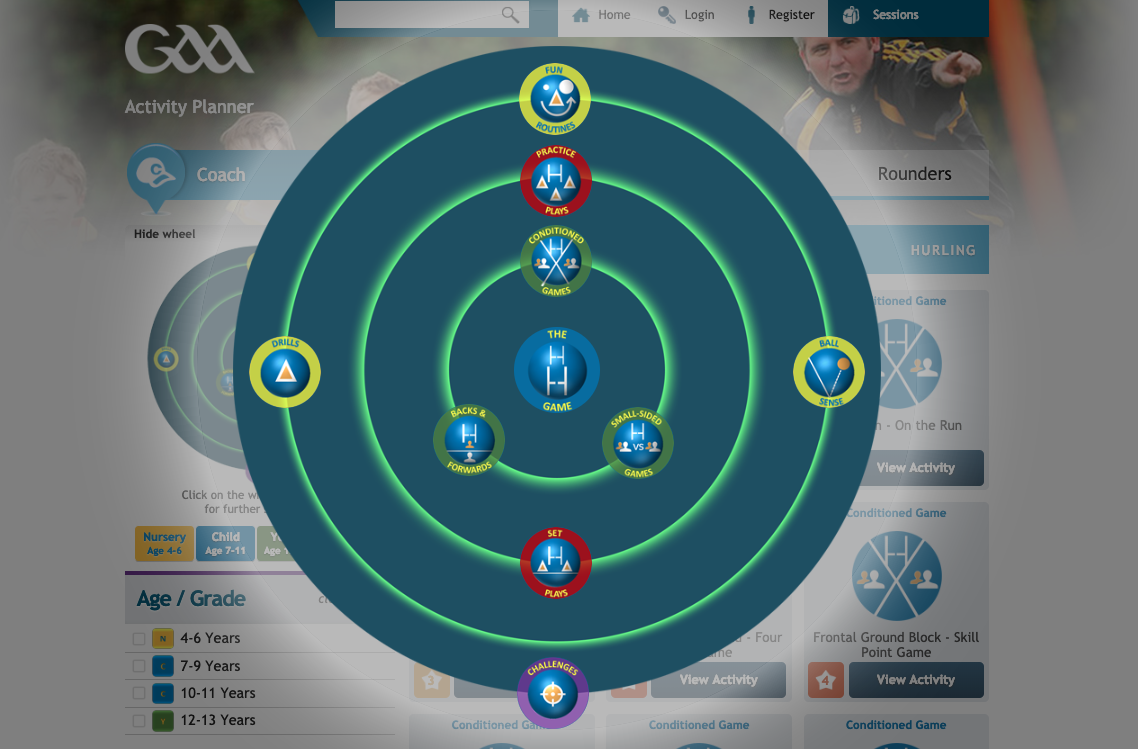
        If you would like to incorporate GAA skills then the GAA Skills Activity Planner is an excellent resource from which to draw.

        Screenshot 2019-02-24 at 21.06.10

        The sessions can be run inside (if you have the facilities) or outside (weather dependent I suppose). Asking in guest coaches, particularly county stars, can create a great buzz of excitement for younger players while also freshening up the sessions.

        If you have any questions about setting up a nursery or the activities included then contact me at fhsperformance@gmail.com.

        Pre-Season HIIT Running

        >>**HIIT Plan Here**<<

        As many GAA teams enter pre-season (or one of many pre-seasons with current championship structures) we can usually expect a pile of running. Managers, coaches and players all suggest many reasons why the hard running is so important from physiological benefits to psychological. Whatever reasons a coach/manager has for the hard running it can often feel like he came up with stuff the night before and the main focus was on making players suffer as much as possible. The hard running is usually continued until the first practice game goes horribly wrong with dropped footballs or missed sliotars even more apparent than the out of breath players. Hard running is usually scaled back at this stage in favour of more “skill” work until another poor performance (usually a league semi-final or championship 1st round) which brings a return to the hard running.

        The emphasis on hard running does provide many benefits such as improved cardiovascular endurance, greater aerobic power, quicker recovery between bouts of high intensity actions and a greater durability to cope with neuromuscular loading. A large body of work has been conducted on aerobic power, specifically through high intensity interval training, by many top researchers and practitioners such as Martin Buchheit, Paul B Laursen, Dan Baker, Mladen Jovanovic & Shane Malone among others. All have slightly different viewpoints on what is precisely the best way to develop aerobic fitness for a particular sport but they do agree on a number of commonalities:

        • High Intensity Interval Training is a time efficient way to develop aerobic fitness for field sports.
        • High Speed running will help to prepare muscles (particularly hamstrings) for some of the demands of the game.
        • Players should experience a number of different running intensities to both develop aerobic power and to prepare for various demands of the game.
        • Players should experience a degree of individuality for optimal aerobic development.
        • A realistically structured periodised model should be utilised to allow for the inclusion of strength & power work, sport specific skill development, tactical work, and playing games.

        Aerobic fitness can be developed through a combination of training modalities such as slower “jogging” style exercise, cross-training on bike or rowing machine, swimming, circuit training or a combination of all. Ideally a mixture of low intensity and high intensity modalities would be used (see more on this by Stephen Seiler) but for the purpose of this article we will be focusing on High Intensity Interval Training (HIIT) and more specifically Maximal Aerobic Speed (MAS).

        MAS or velocity at V02max is a simple measure we can gather from players in the field and use to prescribe individualised running throughout the season. MAS can also be used to monitor fitness levels and adaptations to training among the entire playing squad. There are a number of ways to calculate MAS although the easiest, and most practical, are to get all players to perform either a time trial (5-6 minutes) or a timed distance (1,000m to 2,000). A number of standardised tests such as the Montreal Track Test, Beep Test, Yo-Yo Test or Cooper Run can be used to calculate MAS although the best method is to find what works most easily for you and your team. My own preference is to time all players doing a 1,200m run although longer distances can be used (particularly if your team are already quite fit).

        Each players MAS is calculated by dividing the distance covered (in this case 1,200m) by the time taken (in seconds):


        Player A – 1200m in 5minutes 25seconds (325 seconds)

        1200 / 325 = 3.69 m/s

        Player B – 1200m in 4 minutes 25 seconds (265 seconds)

        1200 / 265 = 4.53 m/s


        The test gives a few pieces of useful information. We can see where some players are in terms of their fitness levels and who may need particular attention while also allowing us to individualise our running sessions.

        Each player should run at or near an intensity based on their MAS. If all players were based off the time of Player A then many would find it too easy and gain very little benefit. If all players were based off the time of Player B then they may find it too difficult, not complete the prescribed session or pull up with an injury.

        We use MAS to prescribe running intensities for each player (or groups of players) based on their current fitness level. Many different intensities can be used based on the time of year, space available, etc but generally we work between 90% & 120% of MAS. A typical example is a 15 second shuttle with 15 seconds rest. If the above players were to perform this at 115% of MAS then we simple multiply their m/s by 15 and it gives us the distance for each player to cover e.g.


        Player A has MAS of 3.69 m/s

        3.69 x 15 = 55 metres

        Player B has MAS of 4.53 m/s

        4.53 x 15 = 68 metres


        As a coach you simple mark two lots of coloured cones (green cones for Player A, red cones for Player B) the required distance apart. Using a stopwatch for time, you simply blow your whistle every 15 seconds and players should cover their prescribed distance in that time with a similar level of effort. This is then repeated for the prescribed number of sets and reps.

        Completely individualising running distances for each athlete would lead to a mess of cones on the field so grouping them into “bins” usually works best. Most teams will work best in three groups although a player returning from injury may require a much lower intensity while a very fit team may all fit into 2 “bins”.


        Pre-Season Plan

        Deciding on specific intensities, sets and reps can often be difficult so I have created a spreadsheet with 10 weeks of suggested running included. The running plan is divided into 2 sections (weeks 1-4 & weeks 5-10). It is generally advised to re-test after the first 4 weeks as some players will respond to training very quickly while others may not. Another test is only advised for players returning from injury or after a period of many games (especially if some players are used very little during this time).

        The plan is merely a suggestion and for coaches who do not feel comfortable laying out a semi-individualised plan themselves. Coaches with more experience of conditioning can feel free to adapt many of the sessions to include more variety in terms of intensity, distance, turns, etc.,

        Combining the suggested sessions with lower intensity work through traditional drills, small-sided games and strength/power work will help improve the overall physical preparation of your squad.

        The spreadsheet can be used through Excel or GoogleSheets, has an accompanying Explainer Video and a PowerPoint or GoogleSlides slideshow with diagrams of all sessions.

        Access a folder with all resources **here**.

        If you have any questions on how to use the spreadsheet or would like to know more on this area then contact me at fhsperformance@gmail.com.

        Pre-Season Gym Work

        Strength & Power Don’t Matter If You’re On The Sideline

        ***Gym Programme***

        The most common goals when teams and athletes begin pre-season training are generally to re-emerge on the field fitter, stronger, faster and more powerful. These are obvious aims when entering the gym and would have very definite benefits to performance… if you’re on the pitch!!

        The best strength & conditioning coaches always say your three main aims are to:

        1. Not injure players in the weight room
        2. Reduce the risk of injury when players are on the field/court
        3. Improve overall fitness (stronger, faster, more powerful, etc)

        The aims are ordered in terms of importance but often people focus on the third and neglect the first two.

        Not injuring players in the weight room should be obvious yet we sometimes hear horror stories of injuries occurring as heavy weight is lifted with poor technique or inappropriate exercises are used before players are ready. This is a basic standard within the profession and should be adhered to at all costs, regardless of requests from over-eager athletes and management.

        Studies of the NFL, NBA, and NHL have found one of the greatest predictors of success across a season to be player availability. Not the financial budget, the number of All-Stars or phenomenal fitness test scores but the number of players who are available for selection throughout the majority of the season. Surely this suggests that our main aim during the off-season is to leave players in a better position to resist injuries when they are playing and training?

        So how do we build this into an actual off-season plan?

        Each sport has a number of common injuries, especially non-contact injuries (contact injuries are like a whack of a hurl on the hand or a kick to the shin). Non-contact injuries are the area we really need to reduce from our time spent in the weight room. We can never truly prevent injuries but simply try to reduce the number of injuries while still allowing players as much time on the field as possible.

        The most common non-contact injuries in GAA are hamstrings pulls, ACL ruptures and groin strains. We often hear of lads with ‘bad hamstrings’ or ‘dodgy groins’ but they are rarely born with this ‘condition’. They generally develop weaknesses and imbalances from incorrect movement or imbalanced training.

        This article (and accompanying plan) will help coaches and individual players to implement an effective pre-season training plan and warm-ups to minimize the number of non-contact injuries suffered and maximize playing time. The key areas focused on will be:

        • Address common weaknesses in players or playing groups.
        • Incorporate simple exercises into a warm-up that will help maintain strength across a playing season.

        A number of areas should be addressed during the off/pre-season (and be maintained during playing season) but if we dedicated specific time to each particular area then our sessions could last for multiple hours and take from other aspects of life. By focusing on a few key areas, we can include the majority of movements and develop most aspects of strength.

        Instead of developing strength in individual muscles, we try to build strength in a range of movements. These can be divided into a couple of categories.

        • Jumping – can include hopping, bounding, jumping for distance, jumping for height and, most importantly, landing on one or two legs.
        • Throwing – can include overhead, sideways, forwards, backward, kneeling, standing, etc.,
        • Upper Body – particular focus on both pushing and pulling movements. Delving into greater detail can include both horizontal and vertical pulling/pushing as well as using dumbbells for unilateral movements or barbells for bilateral movements.
        • Lower Body – can be divided into three key movements: squat, hinge and lunge. Again, these can be further categorized into bilateral and unilateral movements.
        • Core – Mainly divided into flexion and anti-flexion or rotation and anti-rotation exercises.

        Including all exercises and categories in each gym session would be very time consuming and leave athletes fatigued about halfway through the session. Splitting exercises from each category into sessions throughout the week develops most movement categories and qualities while also allowing for an element of variety.

        The gym session attached here is divided into three separate sessions. One focuses entirely on lower body, one on upper body and one is a combination. The third session is entirely optional and can be left out entirely or replaced with an aerobic session if that is more of a priority for some players. Each session mixes in some bilateral and some unilateral movements. Jumping/hopping exercises are included with lower body while throwing exercises are included with upper body. All jumping/throwing is included at the start as the fastest and most powerful exercises should be performed when athletes are at their freshest.

        Two warm-up options have also been included. The corresponding numbers on each option focus on the same movement pattern/area of the body so can be interchanged for each other. These warm-ups can also be used once as part of a RAMP protocol when mixed in with hurling or football drills/games when you return to the pitch.

        The suggested gym session is not designed specifically for any one person. Ideally, each person would follow a tailored plan to address their own specific needs, but this isn’t always possible. This programme is designed to help athletes follow something structured that allows for progression, will reduce the chances of injury while increasing strength and power.

        All exercises written in yellow are a hyperlink to a video of the exercise. Feel free to ask for more guidance on pre/in-season strength work or to offer any feedback on the programme.

        John                                                                fhsperformance@gmail.com

        Post-Workout Recovery Part 2

        In the last post we discussed what was most important directly after exercise. To give a brief synopsis, protein is important to repair the micro-damage that occurs to muscles. This generally takes 24-48 hours so regular portions of protein spread throughout the day should allow for optimal muscle protein synthesis. Carbohydrate is required to replace the glycogen used up during exercise. Glycogen is energy stored in the muscle that can be replaced within 4-6 hours after exercise. How quickly and effectively glycogen is replaced will depend on the amount and type of carbohydrate consumed after exercise.

        Post Exercise MealsWe recommend some fast-acting carbohydrate, mixed with protein, immediately after exercise. Flavoured milk, fat-free yoghurt, chicken sandwiches or protein and fruit smoothies are usually the best options in terms of both meeting nutritional demands and being easy to prepare in advance.

        Very intense and/or long sessions will use up large amounts of glycogen. Replacing this glycogen requires careful planning in terms of how much carbohydrate is consumed afterwards. How to define the intensity of a session can be difficult for many people and often leads to us consuming either too much or too little carbohydrate (or food in general). Using a combination of time and RPE can help us in deciding on our carbohydrate requirements after exercise. We generally recommend the following in terms of how to rate the intensity of a training or match.

        Difficulty Factors
        Light Session 45-60 Minutes Long
        RPE of 6 or less
        Medium Session 60-75 Minutes Long
        RPE of 7-8
        Hard Session 75+ Minutes Long
        RPE of 8+

        *RPE – Rating of Perceived Exertion

        1-10 scale of how difficult a session was. 10 is the hardest session you have ever experienced. 1 is lying in bed relaxing.

        The snacks mentioned above are ideal to keep in a gear-bag for directly after training but ideally we would consume a more traditional looking meal within an hour of our snack. This meal should include a serving of lean protein such as chicken, turkey, beef, tuna, cod, etc., We should avoid fats at this stage as they will slow down the absorption of nutrients. It is important to note that many accompanying sauces or gravy may contain fat so should be avoided or replaced with low-fat options in the post-exercise meal. Choosing the amount of carbohydrate to be consumed is key at this meal. The length or difficulty of the session will guide the serving of carbohydrate. A light session usually requires a small serving of carbohydrate. A medium session requires a moderate serving of carbohydrate. A hard session requires a large session of carbohydrate. Complex carbohydrates, such as rice, potatoes, quinoa, cous-cous or pasta, are best here and should be adapted to suit your own preferences.

        Using a variety of vegetables to fill your plate (and stomach) will help you feel full and satiated after lighter sessions. Adjusting the amount of vegetable consumed should be dependent on the intensity of the session and the amount of carbohydrate consumed. If you have just completed a long and intense session, and require a lot of carbohydrate to recover then extra vegetables will take up a lot of space in your stomach. The fibre will also slow down digestion when fast absorption to replace glycogen is more important. Larger portions of vegetables after lighter sessions will not have the same impact on digestion as there is not as much glycogen to be replenished.

        We will post in more detail about portion sizes in the coming weeks but following the guidelines in the above infographic should help everyone choose the appropriate amount. People who are more active in general will require a larger portion of carbohydrate and so should use 1 portion above what was recommended based on the intensity of their session. These guidelines can also be used to build an adequate meal at lunchtime earlier in the day especially if there is good communication between coaches and players prior to training.

        If using this as a guideline for post-training meals with large groups then self-selection of portions is very important. Keeping protein, carbohydrate and vegetable options separate is recommended as players can choose their own portion sizes. One dish containing meatballs, one containing pasta and another containing vegetable options allows players to build their own plate based on what type of training they just had or based on their own body composition goals. A player just returning from injury who is not up to completing full sessions may require less food than another participating fully will require less food. Allowing him to adjust portion sizes (especially carbohydrate amounts) will help prevent excess weight gain and can help in returning to full fitness sooner.

        Feel free to provide feedback on the above piece. If you would like more information on post-workout recovery or nutrition in general then contact me at fhsperformance@gmail.com

        Post-Session/Game Recovery (Part 1)

        The post-workout window or ‘Window of Gainz’ is often spoken of among gym-goers. Most feel that they must consume a portion of protein (generally a double serving of whey) within 20 minutes of completing their gym session. However, it’s rare to see people act the same after a training session or game even though it may have been of much higher intensity and used up a considerably larger amount of energy (calories).

        Recovery Shakes

        There are two main types of physical recovery required within the muscle after intense exercise. When we perform resistance exercise (weight training, etc,) it causes a number of tiny tears in the muscle. These heal over the course of 24-48 hours. Each time they heal, they grow a little stronger. This is why we get progressively stronger over time from lifting weights, provided there is adequate recovery time between sessions. Protein is the main macronutrient required for repairing these tiny tears and most feel it is necessary to consume protein immediately after exercise. Due to a number of studies by Brad Schoenfoeld, Stu Phillips, Kevin Tipton and countless others, we now know that protein should be evenly spaced out across the day as it takes so long to be fully digested and used by the muscles. I will go into more detail on daily protein needs, timing and sources in the future but for now, we just need to know that protein immediately after exercise is not a necessity for exercise however, we most likely have gone 3-4 hours since previously eating so are most likely due a portion of protein anyway.

        The other type of recovery required involves replacing the energy stored within the muscle, known as glycogen. Glycogen is supplied to our muscles from digested carbohydrates. Glycogen can be topped up relatively quickly, especially in comparison to protein, so consuming carbohydrate immediately after exercise becomes of much greater importance than consuming protein.

        The type of carbohydrate has a significant impact on how quickly it is absorbed by muscles. Wholegrain carbohydrate sources, which are typically higher in fibre, will be released to working muscles much slower than other sources that are typically higher in sugar. This high-fibre, wholegrain sources are ideal for fuelling general day-to-day activities and slowly releasing energy throughout the day, but will not quickly replace lost glycogen stores after intense exercise.

        Fast-acting carbs are the best way of replacing glycogen after intense exercise. These generally come from carbohydrates that are higher in sugar and lower in fibre, although fruits are a good option despite the presence of fibre. Convenience is also a key factor when picking carbohydrates for directly after exercise. Freshness and taste in the dressing-room, directly after a game or training session must be taken into account when picking foods for immediate recovery. While a fat-free, fruit-flavoured yoghurt may provide the right blend of nutrients after a game, it can be difficult to eat if you’ve forgotten your spoon or it’s covered in dirt from a mucky pitch.

        Recovery Options:

        • Flavoured milks are excellent sources of post-exercise nutrition as they combine a blend of high-quality protein with fast-acting carbohydrates in an easy to carry container.
        • Many supplement companies now produce recovery blends of carbohydrate and protein mixed together in one formula.
        • Fruit (bananas, apples, berries, etc.,) with yoghurt drinks (Yop).
        • Smoothie Blends (see above)

        Smoothies are a tasty and nutritious way to meet the requirements of post-workout recovery. Athletes can combine a number of different flavours to meet their own preferences. My own particular favourite is to mix frozen raspberries, vanilla protein, water, ice and spinach. Mixing spinach and raspberries turn the smoothie brown but still taste unbelievable!!

        The amount of carbohydrate consumed after exercise is dependent on the intensity and duration of exercise, timing of the next bout of exercise and the size of the athlete. I will go into further details on how to adjust the portions of recovery snacks along with how to construct full meals for after exercise in the next week or so.

        If you have any questions on post-exercise recovery or would like anything else addressed then feel free to contact me at fhsperformance@gmail.com