
6 years ago today I wrote a piece about High Intensity Interval Training and how it could be used for GAA training. It had an accompanying Drive Folder with 10 weeks of suggested sessions, a fitness test tracker and MAS calculator for dividing your squad into 3 different groups. Since then I’ve coached 5 different teams in person and consulted with another 6. I’ve learned a bit since through trial and error of a few different sessions, approaches and conversations with other coaches. These thoughts are outlined below:
It’s not just 15 on 15 off
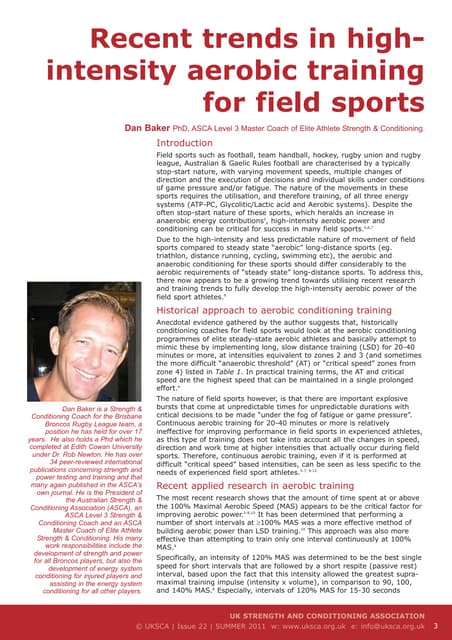
A lot of people automatically assume MAS runs are 15 seconds of work with 15 seconds passive recovery covering between 70 and 85 metres. Often done in 2-3 sets of 8-10 reps, although I’ve heard of a few extreme examples going up to 3 x 16. The 15:15 scheme is just a variation of MAS based training known as the Eurofit method and came from the suggestion in Dan Baker’s paper that popularised so much. Like Helen of Troy, it was the paper that launched a thousand 15 on 15 off sessions. Although the most popular, MAS training can be done at any variety of intensities, over varying distances and with varying types of recovery. Realistically, any intensity from 80% up to 120% will be effective once you do it with appropriate work to recovery times and have a solid justification for why you’re doing it. A variety is generally better for both yourself as a coach and for the players so they don’t get too fed up of the same sessions. You can also use MAS to gauge suggested completion times for set distances, such as 300m or 400m reps, instead of prescribing distance from time. If you want to see a mix of a few different sessions based off an individual’s MAS, you can request a Calculator & 8 Sessions Here.
Appropriate Tests
I nearly always went with a 1k test over a loop. About 2 and a half laps of a pitch. Plenty of others also went with 1k but with 100m shuttles. Once you’re keeping with the same test then it didn’t really matter. You build up your own norms and ”standards” over time, try not to get too focused on just hitting 1k targets while neglecting all other things then use some of your mean group times to calculate distances for shuttles. Generally worked fine but after developing a bit of a better understanding of aerobic exercise, we can definitely do better. A few key guiding principles:
- Minimise Turns
- Try do it on a loop where possible
- Broncos are not a bad test to use overall, it’s just not great for working out MAS as the turns bring in too much of an anaerobic component
- Same with 100m shuttles. The turns make some athletes seem more or less fit (aerobically) than they actually are.
- 4 to 6 Minutes Is Best
- I had a few players go under the 3 minute mark for 1k. I think 2.52 was the best. That’s very fast and impressive but it’s just not long enough to be as aerobic as we want it to be.
- 1k might work for players who are quite unfit
- I generally aim for something that will be around the 5 minute mark based on the group you’re working with. Currently 1400m with the main teams I work with
- 1500m or 1600m might be better for players more on the elite end.
- 1200m might work fine for players who have more development to do
- Keep A Consistent Surface
- The difference in surface from a typical pre-season test in January to the same pitch in June can be very different. This will make your time trials a nice bit quicker. If you just want to give players a boost in confidence, then work away. Otherwise, aim to use a surface that is consistent across the year.
- Most clubs have walking tracks now so just set out a couple of markers that you can reuse. 1300m to 1500m (ish) in distance
- If necessary, go to a 400m running track and do 3.5 (1400m) or 4 laps (1600m). Just make sure you book in the same track for the re-test a while later.
- If you have a suitable loop near your pitch then feel free to use that one too.
- Other Testing Options
- You can calculate MAS scores from the beep test or yo-yo test. I wouldn’t go with the running pace of the last successful stage as it’s a little too reductionist. Nathan Heaney (The Conditioning Consultant) has some good spreadsheets to help make these conversions a little more accurate.
Does It Work?
In a word, Yes. Every team I’ve worked with, both in person and as a consultant, have made significant improvements. I’ve also spoken with at least another 20 coaches who have used the prescribed 10 weeks to make similar improvements across a range of groups. Male, female, hurling, football, adult or underage. Two teams have used the sessions as their main block of conditioning and won senior county finals. I’m not saying it’s purely down to aerobic fitness based off shuttles, but it does provide a logically progressed system. I would also be wary of using this with underage teams. There are many factors (that I won’t go into now) that impact decision-making around isolated running with younger players. I’ve no set rules with this but you do need to consider chronological age, training age, broader environment and culture, aims for the group and season, etc., before deciding if it is right for your group or not.
Do I Still Use It?
Not really. I already said I’ve changed the initial test from 1000m to something a little longer. I also moved away from the initial 3 minute reps done in shuttles as they were incredibly boring for both players and the coach. Having dug a bit deeper into aerobic fitness, I also think the further you move from 100% of MAS (in either direction) the less appropriate it is for players, especially those with differing profiles (more on this below). I’d much prefer to build up the volume of high speed running metres (anything greater than 17 km/h) progressively over time than set distances that are specific to the athlete’s current MAS. This can be achieved by adjusting rest intervals accordingly. If I had access to live GPS and/or live heart rate, I’d try get as much as possible from game based scenarios with “top-up” runs to ensure players are adequately prepared. I think the suggested sessions can be really useful for a team with minimal aerobic development or those relatively new to structured training, but I definitely wouldn’t be relying on it for a team who have consistently well applied training for a few years.
RPE Is Great For Longer Reps
As I said, the longer shuttle reps can be really boring. I also think moving more than 15% either direction from MAS can lead to too many individual variances. For this reason, I much prefer to use RPE for easier runs. Players can form mini groups and work to a similar pace. If some can track HR, then that’s really helpful too. Generally for longer reps (3-5 minutes), I don’t want them working harder then 6/10. They may find it difficult to identify and control in the first few sessions but it’s well worth trying to develop for the longer term benefit. Monitoring their breathing rate and just asking how they feel should help to identify accurate RPE ratings. Once this is developed, you can use it for a variety of aerobic interval sessions such as 5 x 3 minutes, 5, 4, 3, 2, 1 minutes progressive, 30-20-10 Fartleks, etc.,
What Is “Aerobic Speed”?

Fair enough to the commenter, MAS may not be the correct term. Velocity at VO2 max is or vVO2 for short. It is the running velocity associated with an individual’s highest rate of oxygen consumption. We obviously can’t test that completely accurately via timed laps of a pitch but we try to estimate it through the above suggested field tests. Improvements in vVO2 or covering 1400m in less time are proxy measures for either increased VO2max or greater running economy at the same VO2. Either way, it’s largely irrelevant for what we want. The aim is to be aerobically fitter as that allows us to cover greater distance and complete more “game actions” (hat tip Raymond Verheijen) with less fatigue. I understand that an awful lot of “game actions” are not aerobic in nature and we should train them accordingly through greater specificity, however, the ability to recover from these is largely driven by greater aerobic fitness. Also, the more aerobically developed we are, the less fatigue we accumulate over the course of a game as each action requires a lower percentage of energy cost.
In terms of MAS being developed for track cyclists (1000m Time Trials), I honestly don’t know. If anything, they’re more likely to use Maximal Aerobic Power (MAP), Functional Threshold Power (FTP) or a series of measures to create an overall power profile. I have heard of an ultrarunner using his vVO2 to prescribe the majority of his training so it is useful for distances much longer than the 4-6 minute range. Either way, it’s just a measure to help guide what we running we do in training and allow us to monitor improvements over time. Not necessarily an overall system that all of your training should be based around.
What’s Missing?
I already said high speed running is really important as, based on the aerobic development of some players, they would not achieve this even at 120% of MAS. Therefore, we need to sprinkle in more running at higher speeds and adjust recovery times accordingly. Over the last two seasons I have tried to implement a “Fast to Fit” approach. We begin with more high speed running through shorter bouts and will allow players to self-select recovery. Tempo intervals (Charlie Francis style) with long walk recovery allow players to complete the suggested distance and find their own recovery. An example of this would be to begin with 30-50m reps with a slow walk back. This then progresses out to 100m up to 150m reps over time as we accumulate total volume.
I mentioned in the original article that hamstrings require high speed running volume to reduce the chances of injury. Realistically, they need to move a lot faster than that on a regular (at least weekly) basis. You should be incorporating sprints into your training. I’ll probably write another piece on that at some stage though and go into more detail. Alternatively, you can just get my Need For Speed 6 week plan and run it a few times consecutively.
Profiling of players is becoming increasingly popular of late, largely through the work of Gareth Sandford. It essentially boils down to the grouping of athletes based on what type of training they best respond to. The main categories are aerobic (love the longer stuff but wouldn’t have a great top speed), fast twitch (very fast and explosive but really struggle with longer reps), and hybrid (mixture of the two). We can’t completely individualise training for everyone but there may be some times that we can split players into different groups, especially during off-season or the pre-season sessions they complete away from the group. A couple of examples:
Fast Twitch Dominant
- Damien is your classic fast-twitch. Very fast and explosive. Great vertical jump, sprint times and sidestep. Longer reps (anything longer than 2 minutes) absolutely wreck him. Instead of forcing him through these, I’ve given him extra tempo runs and dribbles to complete for his individual sessions.
- When we complete 5, 4, 3, 2, 1 as a group, he will do dribbles and shuttles while others do the 5 minute and 4 minute reps then jump in for 3, 2 and 1.
- We also give him some bike session to complete that are largely sprint based. 5-10 minute warm-up, 6 x 10s sprints with 50s easy pedalling followed by 6-10 reps 30s hard with 90s recovery.
Aerobic Dominant
- Shane is very aerobic in nature. Has a large work capacity and rarely gets overly fatigued. He lacks the absolute top speed of other players though.
- While they may not get much development from the harder shuttles, they still need to be prepared for these in games so will still complete them.
- In pre-season we will give Shane some longer type runs to complete. 6-8k with 4-6 x 100m hard at the end.
- Off-feet conditioning sessions will be longer in nature, such as 5 x 3 minutes, but also with shorter rest as they can recover from these efforts much quicker.
Conclusion
I’ll hopefully keep learning more and write a further update in another 6 years with loads of changes. I’m currently intrigued by Critical Speed/Velocity, HR based training and how best to leverage speed work for general work capacity development.
If you require any guidance for your own team this year, then feel free to get in touch via email at fhsperformance@gmail.com
 FHS-Performance