
——-Folder of 10 Sessions Here——–
 “Mol an Óige agus Tiocfaidh Siad”
As most teams head into pre-season we are all wondering about how best to prepare our adult teams for the coming year, we often fail to realise that our results will be the culmination of many years of preparation. With the exception of a few outliers, it’s very unlikely that any adult player has only recently begun playing GAA. With potentially 20 years of preparation behind many adult players, it’s worth making sure our underage pathways are sufficiently structured to support their journey to the top-level (or whatever level they decide to aim for). Ensuring your current adult teams are well prepared for the upcoming championship is an obvious priority in the majority of clubs while also ensuring there will be players, hopefully of high quality, to populate teams in 10, 15 or 20 years.
Setting up a nursery in your local club brings with it many benefits on top of the obvious development of young players (which can often become a secondary or tertiary priority in particularly successful nursery structures). Some of the key benefits, and will be addressed in more detail below are:
- Development of Fundamental Movement Skills
- Recruitment of New Players
- Recruitment of New Coaches
- Showcasing Facilities and Structures
If you wish to skip over the benefits then scroll to the bottom of the page where you will find suggestions on how to structure your own GAA (or any other sport) nursery.
Development of Fundamental Movement Skills
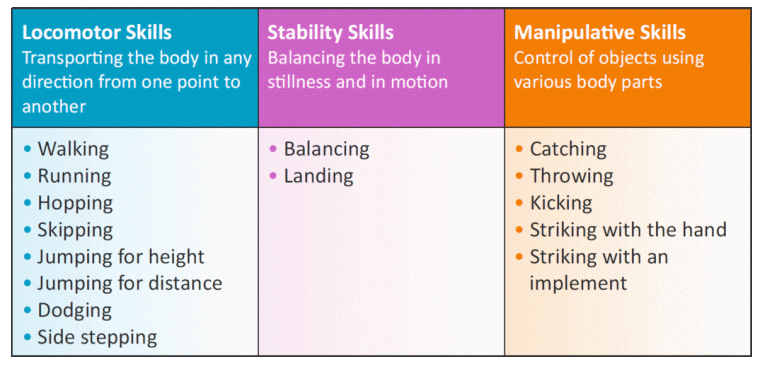
Fundamental movement skills fall into three categories. Locomotor, stability and manipulative. Locomotor skills involve movement of the child themselves through motions such as walking, running, jumping, side-stepping, hopping and more. Stability skills are balancing and landing. Manipulative skills involve the controlled movement of something external to the child (like a ball) such as throwing, kicking and catching. Ideally these skills should be developed from ages 5 through to 9 or 10 but unfortunately do not receive enough attention (for a variety of reasons). Irish children were found to have poor levels of FMS with 90% lacking competency through the full range of skills. This has many knock-on effects, which include a decreased likeliness to participate in physical activity in later life.
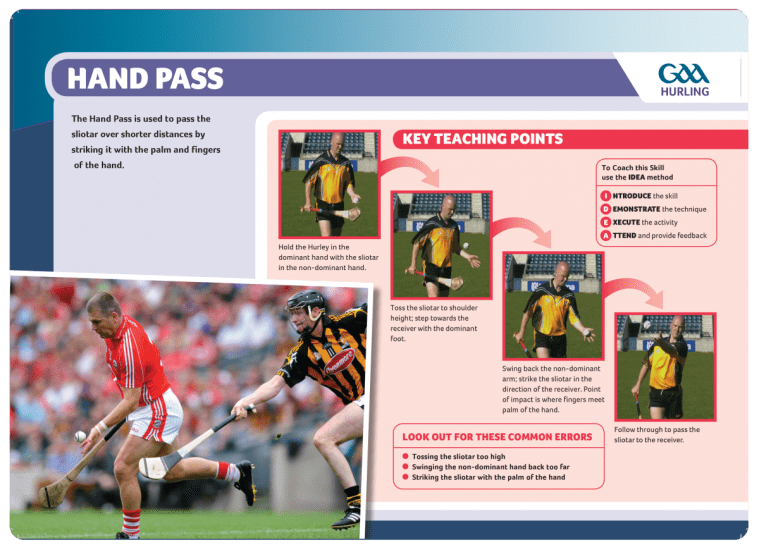
Fundamental movement skills provide the base for all sport-specific skills. If we pick a skill from hurling, such as the handpass, we can find many underlying fundamental movement skills necessary for it to be successful. Throwing, catching and striking with the hand are obvious but when we look at hand-passing in the context of the game we also see how important running, dodging, side-stepping and landing can be as we add in movement and opposition. Developing these fundamental skills would ideally be done primarily through play and exploration with tiny bits of instruction mixed in. This will be explored in greater detail below.
Recruitment of New Players
The competition between sporting organisations to recruit new players is constantly increasing. There is a much greater choice for children (and their parents) to choose from in terms of what activities they can try out. The traditional sports of GAA, Soccer and Rugby have always had somewhat of a competition for players while still co-existing in many of the same towns and parishes. Recent successes at the international level of rowers, middle distance runners and hockey players coupled with the growth of part-recreational, part-competitive activities such as Martial Arts and Crossfit have increased the options for physical activity participation. Many soccer leagues have also moved away from the winter period and tried to base most competitions around the summer months. This has led to many organisations recruiting at a much younger age than in previous years.
There are many ways to recruit new players to your local GAA club but a combined approach that targets both parents and children generally works best. Social media campaigns through Facebook, Twitter and Instagram will inform the majority of parents of when everything is scheduled. Updating social media platforms weekly with news of particular events, pictures and videos of various activities and updates on potential changes in time help to keep parents informed. Recruiting children will often work best through the local primary school (see below for creating stronger links with the community). Flyers with information on when the nursery sessions take place should be given to every child, particularly those in infants classes. When these flyers are given out by well-known GAA stars from the locality it can also have a much greater effect on the children and their motivation to attend. If the local school will allow, then providing a sample sesion of fun games to the children can also serve as an enticement to attend the local nursery once it begins.
Recruitment of New Coaches
We may lose sight of this at times, but essentially, volunteerism is still the primary driver of the GAA. Without volunteers then we have no one to carry out the many tasks from facility preparation & maintenance to coaching the majority of teams while still ensuring all administration and fundraising is up to date. Recruiting all of these volunteers can be quite difficult. There are many potential barriers, particularly for those with no previous links to the GAA, when looking to volunteer at a new organisation. Perceived lack of knowledge in the sport; no coaching/teaching experience; not knowing anyone currently involved; fear of criticism; not recognising own strengths; are some of the common reasons people do not volunteer as coaches. The majority of people reading this will have experience of coaching and feel relatively comfortable getting involved. For many, however, it will be the most alien thing imaginable to them. Making the steps from, no affiliation whatsoever to a potential coach, as easy as possible is key when recruiting new volunteers. Entering into the world of GAA coaching is particularly daunting as the specific skills can seem quite complex, group management may seem impossible at the outset and the long-term time commitment may also serve as a deterrent. Encouraging parents of new/potential players to become involved as assistant coaches, or even to participate in the sessions themselves, may serve as a way of introducing them to the club and the local community. Beginning with parent and toddler/child sessions serves both as a support for younger children who are new to the sport, but also for parents who are new to the community. Many parents on their first few journeys to the GAA pitch can feel a bit excluded and awkward as they watch on from the sideline and wonder who to make small talk with. Including parents in the activities gives them a purpose while present helps create topics of conversation with other parents and creates an opportunity for parents and children to be active together.
Setting up tea/coffee stations for parents as they watch underage training or a fruit station afterwards also creates a space for people to congregate. This allows a “Recruiter” to focus on a specific area as they try to encourage people to volunteer.

Other options for recruiting new coaches include setting up a rotation system for the U15, U16, U18, U19 team to attend and help out or serve as assistant coaches. Encouraging Transition Year students from the locality to engage in the Gaisce President’s Award may also serve as an incentive to recruit coaches. Assisting as a coach for 13 weeks of 1-hour sessions can count towards either the ‘Learning A New Skill’ section or ‘Community Involvement’.
Showcasing Facilities and Structures
Many GAA clubs around the country boast excellent facilities yet people new to the locality may be unaware of what is on their doorstep. Creating links with local primary schools through Go-Games tournaments after school or Open Mornings on weekends will help in promoting the facilities already in place. Organising a fun morning that combines GAA with other fun/recreational activities will show parents what the locality has to offer both their children and themselves. Floodlit areas, astroturf pitches, indoor halls, gyms, walking tracks and outdoor play areas are examples of the foresight, work and dedication done by many GAA volunteers in the past. Utilising these for current members while also highlighting their existence for potential new members can help clubs to grow in the future.
Setting Up Your Nursery
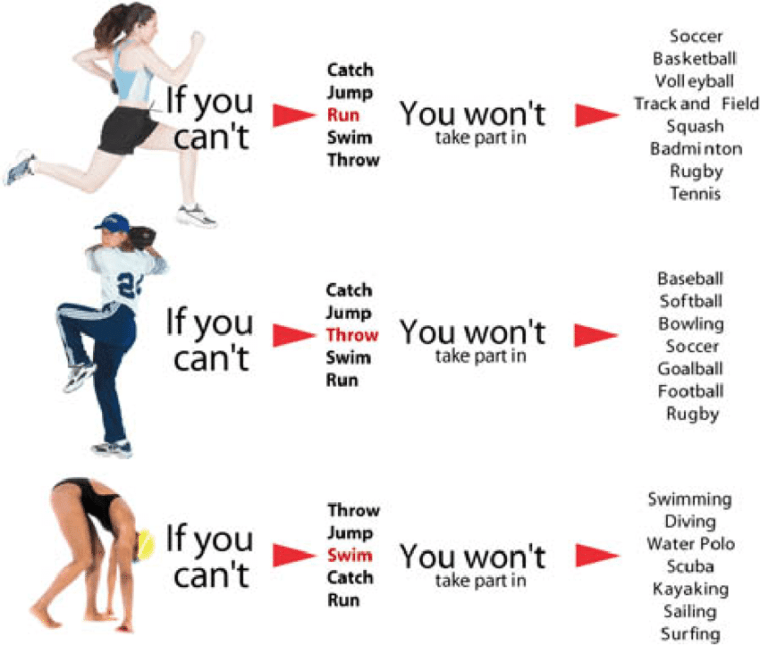
I mentioned above that Fundamental Movement Skills are the building blocks of all future sports skills. For example, a handpass in hurling can include Throwing, Catching, Striking with the Hand, Running, Jumping, Landing, Side-Stepping & Dodging as we include it in the wider context of the game. Developing these skills in younger players (ideally between the ages of 5 and 9) makes learning sport-specific skills much easier in the future. As time develops, hurling or football skills can be included along with FMS. Using basic throwing and catching games also helps to develop game sense in younger players as they may not possess the necessary sports skills to apply to hurling or football games.
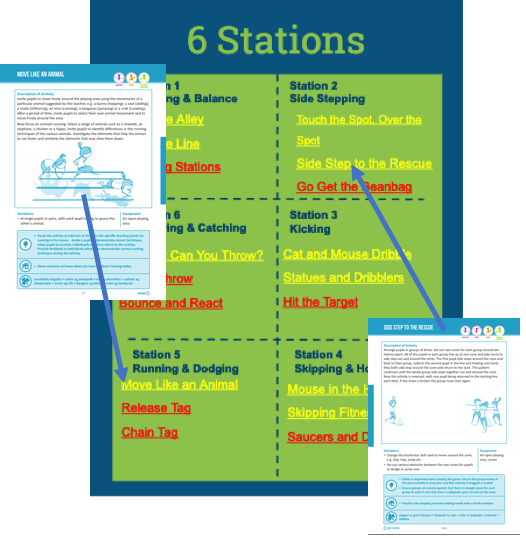
Below is a suggested structure for how to run a nursery session through station based coaching. Each station focuses on a specific skill. A coach (or two) stays at a station. Each group of children spends 8-10 minutes at a station before moving onto the next. The coach (or coaches) remain at the station. This makes it easier for a coach as they only need to be comfortable with 1-2 skills and 2-3 games which are repeated for the session. Children also experience a variety of skills through the medium of games with minimal coaching. Exploration of the skills is key at this stage.

Each of the underlined names listed below is a hyperlink to a description of the game. As you move further through each of the documents you will find links to descriptions of the skills and videos that explain them in greater detail.
Advertisement
Notifying people that your nursery is beginning can be done through a variety of mediums. Social media platforms such as Facebook, Instagram and Twitter will reach the majority of parents while giving flyers to children in schools may also help children to ‘remind’ their parents that it’s beginning. If the local school allows, then a practical demonstration of some games will serve as an excellent advertisement of what’s to come. If local adult GAA stars are available to deliver flyers or participate in games then it may also work as a further incentive.

A folder of 10 suggested sessions is included here!
All games and skill descriptions are taken from the excellent Move Well Move Often primary school PE programme developed by the PDST. It is comprised of three books which make up skill descriptions and games.
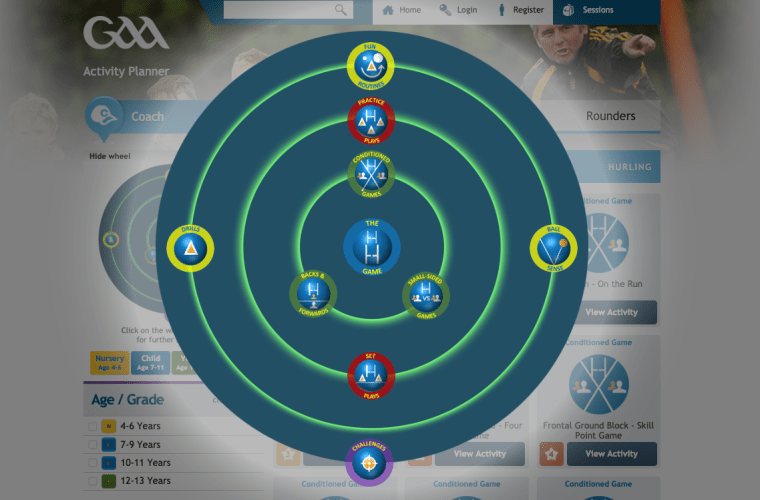
If you would like to incorporate GAA skills then the GAA Skills Activity Planner is an excellent resource from which to draw.
The sessions can be run inside (if you have the facilities) or outside (weather dependent I suppose). Asking in guest coaches, particularly county stars, can create a great buzz of excitement for younger players while also freshening up the sessions.
If you have any questions about setting up a nursery or the activities included then contact me at fhsperformance@gmail.com.
 FHS-Performance