
In the last post we discussed what was most important directly after exercise. To give a brief synopsis, protein is important to repair the micro-damage that occurs to muscles. This generally takes 24-48 hours so regular portions of protein spread throughout the day should allow for optimal muscle protein synthesis. Carbohydrate is required to replace the glycogen used up during exercise. Glycogen is energy stored in the muscle that can be replaced within 4-6 hours after exercise. How quickly and effectively glycogen is replaced will depend on the amount and type of carbohydrate consumed after exercise.
 We recommend some fast-acting carbohydrate, mixed with protein, immediately after exercise. Flavoured milk, fat-free yoghurt, chicken sandwiches or protein and fruit smoothies are usually the best options in terms of both meeting nutritional demands and being easy to prepare in advance.
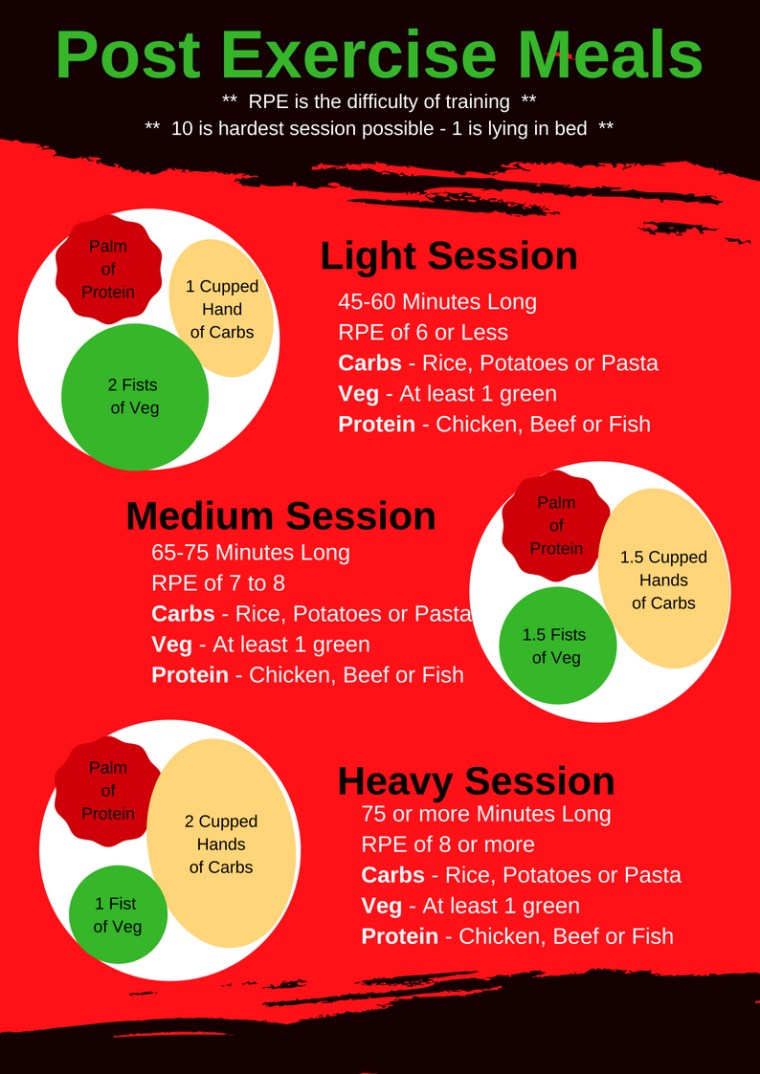
Very intense and/or long sessions will use up large amounts of glycogen. Replacing this glycogen requires careful planning in terms of how much carbohydrate is consumed afterwards. How to define the intensity of a session can be difficult for many people and often leads to us consuming either too much or too little carbohydrate (or food in general). Using a combination of time and RPE can help us in deciding on our carbohydrate requirements after exercise. We generally recommend the following in terms of how to rate the intensity of a training or match.
| Difficulty | Factors |
| Light Session | 45-60 Minutes Long |
| RPE of 6 or less | |
| Medium Session | 60-75 Minutes Long |
| RPE of 7-8 | |
| Hard Session | 75+ Minutes Long |
| RPE of 8+ |
*RPE – Rating of Perceived Exertion
1-10 scale of how difficult a session was. 10 is the hardest session you have ever experienced. 1 is lying in bed relaxing.
The snacks mentioned above are ideal to keep in a gear-bag for directly after training but ideally we would consume a more traditional looking meal within an hour of our snack. This meal should include a serving of lean protein such as chicken, turkey, beef, tuna, cod, etc., We should avoid fats at this stage as they will slow down the absorption of nutrients. It is important to note that many accompanying sauces or gravy may contain fat so should be avoided or replaced with low-fat options in the post-exercise meal. Choosing the amount of carbohydrate to be consumed is key at this meal. The length or difficulty of the session will guide the serving of carbohydrate. A light session usually requires a small serving of carbohydrate. A medium session requires a moderate serving of carbohydrate. A hard session requires a large session of carbohydrate. Complex carbohydrates, such as rice, potatoes, quinoa, cous-cous or pasta, are best here and should be adapted to suit your own preferences.
Using a variety of vegetables to fill your plate (and stomach) will help you feel full and satiated after lighter sessions. Adjusting the amount of vegetable consumed should be dependent on the intensity of the session and the amount of carbohydrate consumed. If you have just completed a long and intense session, and require a lot of carbohydrate to recover then extra vegetables will take up a lot of space in your stomach. The fibre will also slow down digestion when fast absorption to replace glycogen is more important. Larger portions of vegetables after lighter sessions will not have the same impact on digestion as there is not as much glycogen to be replenished.
We will post in more detail about portion sizes in the coming weeks but following the guidelines in the above infographic should help everyone choose the appropriate amount. People who are more active in general will require a larger portion of carbohydrate and so should use 1 portion above what was recommended based on the intensity of their session. These guidelines can also be used to build an adequate meal at lunchtime earlier in the day especially if there is good communication between coaches and players prior to training.
If using this as a guideline for post-training meals with large groups then self-selection of portions is very important. Keeping protein, carbohydrate and vegetable options separate is recommended as players can choose their own portion sizes. One dish containing meatballs, one containing pasta and another containing vegetable options allows players to build their own plate based on what type of training they just had or based on their own body composition goals. A player just returning from injury who is not up to completing full sessions may require less food than another participating fully will require less food. Allowing him to adjust portion sizes (especially carbohydrate amounts) will help prevent excess weight gain and can help in returning to full fitness sooner.
Feel free to provide feedback on the above piece. If you would like more information on post-workout recovery or nutrition in general then contact me at fhsperformance@gmail.com
 FHS-Performance
One thought on “Post-Workout Recovery Part 2”