
As we enter into the summer months, training is kicking up a notch. Matches are more frequent, the ground is harder and important competitions loom closer. Everyone is expected to train harder but how many of us know how to match our recovery to this hard training?
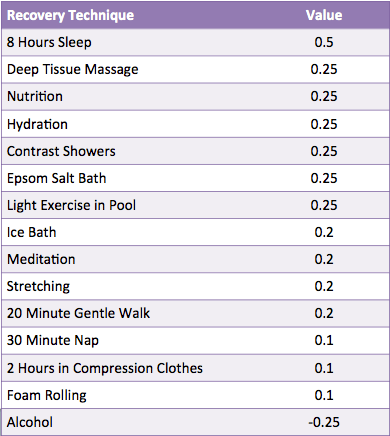
Above you will see a table with a variety of recovery techniques. Each technique has a corresponding value. To ensure you are fully recovered, all of the values should add up to a minimum of 1. If a training session, match, race or competition is especially hard then you may need to reach a higher value, such as 1.5 or even 2.
Each strategy has a different value, as some will aid recovery much quicker and more effectively than others. The strategies with higher values should be given more importance, as they will provide the most benefits. Not everyone will be able to access each strategy but the simplest are often the most effective so don’t worry about substituting one in for another.
Below I will a brief guide to each one and how to get the most from each.
8 Hours Sleep
As simple as it sounds. Get to bed early. Turn off Netflix. Put the phone away. Do some light reading (from a book or kindle) and sleep in a dark room. Try to set a bedtime routine such as getting food or clothes ready for the morning before you go to bed. Avoid caffeinated drinks like tea/coffee. Consider taking some ZMA supplements or drinking a chamomile tea as they help to achieve a deeper sleep. I have found setting an alarm very helpful in getting myself to bed at a consistent time.
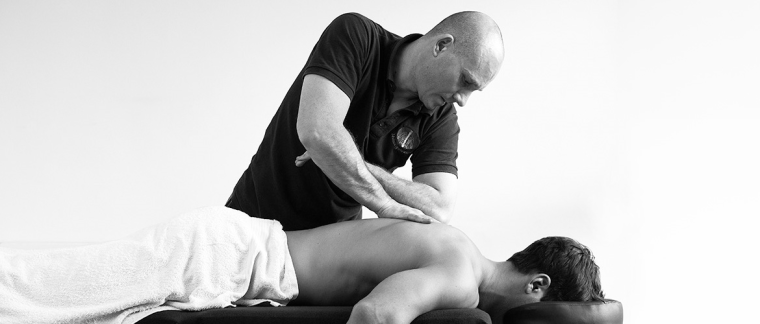
Deep Tissue Massage
This will not be practical for many, as they do not have access to a masseuse on a regular basis. Many elite athletes will be in contact with a physio at most training sessions so a massage after training will boost recovery. Try to only use massage about once a fortnight unless being treated for an injury as it will lose its benefits if used too frequently. You also don’t want to become ‘that guy’ that’s always on the physio table.
Nutrition
I could write a book on the correct nutrition to accompany training and recovery so I will keep it very short and simple for this post. A healthy, balanced nutritious diet will aid everyone regardless if they are elite athletes, recreational joggers or completely sedentary. Takeaways and processed food will not aid recovery much bar providing calories. Whole foods such as beef, chicken, fish, eggs, potatoes, rice, milk, nuts, fruit and vegetables will provide the body with all it needs to recover in terms of nutrition.
Hydration
Drink plenty of water throughout the day. How much is plenty? If you weigh between 50kg and 65kg then 2 to 2.5 litres is enough in a day. 65kg and 80kg should consume 2.5 to 3 litres. 80kg to 95 kg need between 3 and 4 litres. 95kg+ need 4-5 litres per day. The majority of your hydration should come from water. If you don’t like the taste then add a small bit of no added sugar cordial such as Mi-Wadi or Robinsons. Lucozade Sport or other isotonic drinks are not required unless you are training very intensely for over 80 minutes. Some people may require extra water if they sweat more during training. The simplest way to find out how much water you lose during training is to weigh yourself before and afterwards. You need to drink about the same millilitres of water for grams of weight lost during training.
Contrast Showers/Baths
This requires both hot and cold water sources set up very close to each other. Simply spend 30 seconds underneath each and repeat 2-3 times. Always begin with the cold shower. This can also be done with baths. The simplest way for many teams is to set up a tub of cold water and ice beside a hot shower. Players spend 45-60 seconds in the cold tub then immediately jump under the hot shower. Repeat for best results.
Epsom Salt Bath
Run a bath as normal with hot water but add large fistful of Epsom salt to the bath. Epsom salts can be bought in most pharmacies and vet surgeries. Spend 20-30 minutes soaking on the hot water. Make sure you bring a bottle of water to drink on while in the bath as the heat can lead to dehydration.
Light Exercise in Pool
Accessible to many after a gym session and commonly used by teams after particularly tough matches. Some very light exercise and stretch
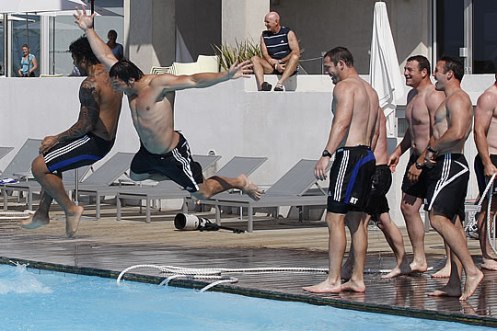
ing in the pool boosts recovery as the water takes away some of the effects of gravity. The heat in the water also helps blood move around the body. Running through a warm-up routine similar to what you normally do before a game will cover most of the movement planes. Feel free to add in any extra movements or stretches if you feel stiff.
Ice Bath
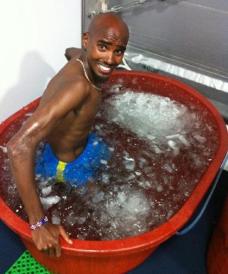
More effective when used in conjunction with hot water but still leaves the body feeling refreshed. A tub of cold water and ice, generally 6-9 degrees Celsius, works best when immersed for 3-5 minutes. If you do not have access to a tub then a nearby river, stream or lake will work just as well.
Meditation
This works very well for recovery of the mind, which can be as important, if not more than, the body. I am not an expert on meditation yet there are countless tutorials online that will help you to develop your own techniques. My preferred source is the Headspace app. Meditating before bed usually leads to a deeper sleep.
Stretching
By stretching I mean targeted range of motion work about a number of joints. This involves dynamic stretching around major joints such as hips and shoulders. Static stretching can also be done but should be held for a minimum of 30 seconds with 60 seconds more preferable. The usual tradition of holding each stretch for 10 seconds after a training session will have little benefit and almost no impact on recovery.
20 Minute Gentle Walk
This is very effective for people who train early in the day or have sedentary jobs. Sitting for prolonged periods leads to increased stiffness after a heavy session. A gentle walk will allow the body to get moving again, pump some blood to the affected muscles and usually provide fresh air for the mind. It can be a great chance to spend time with a pet, the outdoors or listening to music. A gentle walk for someone who trains later in the day will not be as effective before bed but can provide benefits the following morning if they have the time.
30 Minute Nap
Professional athletes are renowned for 2 habits they all have in common. An addiction to caffeine and a love of naps. If your day allows for a 30-60 minute nap then use them where possible to remain fresh throughout the rest of the day. A demanding job can leave evening sessions very tough while a short nap in between will provide an extra freshness and energy going into the evening session. This also works for people who train twice a day, such as crossfitters, who need as much recovery as possible. A daytime nap, between sessions, relieves much of the fatigue of the previous session.
2 Hours in Compression Clothes
While they will provide heat on cold days, compression clothes are now widely used by athletes for recovery. Many will pull on a pair of tight leggings after a tough training session to help aid blood flow to the affected muscles and to prevent swelling to the affected areas.
Foam Rolling
Many will be surprised to see this with such a low value but it will not provide as much recovery as most of the other strategies. Foam rolling is excellent for working out stiffness or small knots in muscles. If done regularly (1-2 times per week) it will have little effect as muscle damage is kept in check. Most people find it very painful as they simply don’t do it often enough. 10 minutes is plenty of time twice a week to ensure muscle stiffness is kept under control. A session of deep tissue massage may be required if foam rolling remains too sore after a prolonged period. When used in conjunction with stretching it can provide huge benefits to recovery, mobility and injury prevention.
All of the above strategies and their values are relative to the individual. Some may provide more benefit than is suggested while some may provide less. Use this table as a guide to find what works best for you. There are also many techniques not mentioned above such as spending time with family and friends that will provide more recovery for the mind than the body. This can often be as effective, if not more so, than any physical recovery.
If you have any questions on anything mentioned above or would like me to write on any other topics please contact me on fhsperformance@gmail.com.
John
 FHS-Performance
One thought on “Training Harder? Recover Smarter!”